Categories
15. Vanishing Properties and Social Change: A Systems Science Perspective

Vanishing Properties and Social Change: A Systems Science Perspective

Emergent Properties

In systems theory, an emergent property is a characteristic that arises at the level of a system but is absent in its individual components. This is commonly seen in nature, physics, and social systems. The classic example of an emergent property is, of course, consciousness. The human mind is conscious, but its component neurons are not.

Much has been written about emergent properties and the concept is a keystone in systems science. They are generally thought to have a causal basis and to be a consequence of interactions between the component parts. For example, there is much scientific evidence that consciousness is due to feedback through our sensory processing centres thereby making us aware of our own thoughts. Some of this evidence is discussed at https://rational-understanding.com/2021/10/22/consciousness/  

Vanishing Properties

But what of the complementary concept: disappearing or vanishing properties? There appears to be little, if any, awareness or discussion around this concept in the systems community. Yet the concept not only exists but also has a significant impact on the reality that we experience. Perhaps, it is because vanishing properties are often more easily explained than emergent ones, which to this day, seem to have a mystical aura around them?  Vanishing properties are crucial for understanding why large-scale social and environmental problems persist despite widespread individual concern.

Vanishing properties occur when attributes present in individual components fail to manifest at the system level. For example, atoms consist of positively charged protons and negatively charged electrons. While the individual components have a charge, a neutral atom as a whole exhibits no net charge, effectively “cancelling out” this property.

While emergent properties have long been studied in systems science, the concept of vanishing properties remains underexplored. Yet, understanding how responsibility, action, and ethical concern can disappear in collective settings is crucial for tackling today’s most pressing social challenges from climate change to political engagement.

Before discussing practical examples of vanishing properties in society, I would first like to mention the work of two important figures in the field: Floyd Allport and Albert Bandura.

Floyd Allport

Floyd Allport (1890–1978) was a pioneering figure in social psychology, known for emphasising the importance of individual behaviour in social contexts. His work is highly relevant to the concept of vanishing properties in the social context, particularly in understanding how individual behaviours fail to manifest at the collective level. His rejection of the “group mind” aligns with the idea that societal patterns arise from the actions (or inactions) of individuals, rather than from some mystical or autonomous group entity. This perspective is crucial in explaining why individual responsibility or intention can disappear in collective settings, a key characteristic of vanishing properties.

For example, Allport’s research on social facilitation and inhibition provides insight into how people’s behaviour changes when they are part of a group. In some cases, the presence of others enhances individual performance (social facilitation), but in more complex or high-pressure situations, individuals may withhold action, assuming that others will take the lead (similar to the bystander effect). This can explain why personal responsibility for addressing issues like climate change, political activism, or poverty may vanish in large social settings. Individuals assume that their contributions are insignificant or that others will step in.

Allport’s emphasis on individual responsibility in collective settings influenced later research on diffusion of responsibility, groupthink, and social loafing, phenomena where action diminishes as group size increases.

Albert Bandura

Albert Bandura (1925–2021) was a pioneering psychologist best known for his work on social learning theory, self-efficacy, and moral disengagement. Later in his career, Bandura developed the theory of moral disengagement. This concept, which has been applied to understanding everything from corporate misconduct to social and environmental inaction, explains how individuals rationalise harmful or unethical behaviour, allowing them to detach from personal responsibility in a collective setting. It helps to explain why moral responsibility can vanish at the group level, even when individuals personally recognise an issue as wrong. Bandura identified several ways in which moral disengagement operates, including diffusion of responsibility, dehumanisation of victims, and euphemistic labelling, where harmful actions are framed in neutral or positive terms.

An example of the latter is Russia’s “special military operation” in Ukraine. By using this term, the Russian government avoided the more negative connotations of “war” or “aggression,” which could trigger stronger domestic and international opposition. This euphemistic language helped to justify the military action, downplay its severity, and align public perception with the government’s narrative, making it easier for individuals to morally disengage from the real human suffering and destruction involved.

Another example of euphemistic labelling is found in corporate ‘greenwashing,’ where companies reframe environmentally harmful practices in misleadingly positive terms. For instance, airlines advertising ‘carbon-neutral flights’ often rely on questionable carbon offset schemes rather than reducing emissions.

Vanishing Properties in Society and Their Impact

In sociology, vanishing properties explain why problems arise with collective action. Despite individual awareness and concern, collective action often fails to materialise. Some examples of this effect are given below.

1. Climate Change and the Diffusion of Responsibility (The Bystander Effect)

The bystander effect is a psychological phenomenon where individuals are less likely to help someone in distress when others are present. They assume that someone else will take responsibility. The term was coined by John Darley and Bibb Latané in 1968 after their research on the murder of Kitty Genovese, where multiple witnesses reportedly failed to intervene. Their studies demonstrated that the presence of others leads to diffusion of responsibility, reducing the likelihood of individual action.

In the case of climate change, many individuals recognise it as a major issue and take small actions, e.g., recycling or reducing plastic use. However, many also believe their personal contributions are insignificant in the grand scheme, leading to widespread inaction. This results in what Garrett Hardin referred to in his 1968 essay as “The Tragedy of the Commons”. Resources become depleted because individuals have no incentive to limit their consumption and assume that others should take responsibility.

2. Political Apathy and Pluralistic Ignorance

Many individuals may privately disagree with an unjust policy or social norm but assume that others support it. Since no one openly challenges the status quo, it remains unchallenged, even if many oppose it internally. The result can be that policies and social structures persist even when the majority oppose them, as seen in past civil rights struggles and modern political apathy.

3. Voting and the Perceived Irrelevance of One Vote

A single individual’s vote has a small chance of changing the outcome of an election. However, if many people believe their vote does not matter, turnout decreases, affecting the result. The consequence can be low voter participation, the weakening of democracy, and unrepresentative governance.

4. Poverty and Compassion Fatigue

The concept of vanishing properties can also apply to the effect of group, as opposed to individual, issues on people. For example, when we hear about one specific person in need, we often feel empathy and a desire to help. However, large scale poverty can feel overwhelming, leading to a sense of powerlessness and disengagement. The consequence can be “compassion fatigue,” where we shut down emotionally in response to large-scale suffering.

Countering Vanishing Properties: Strategies for Social Change

While vanishing properties explain societal inertia, history has shown that effective strategies can counter this. Some examples of successful strategies are given below.

1. Climate Change: Social Norms and Behavioural Nudging

Sweden combined policy (carbon taxes) with visible social norms, such as increased bicycle lanes and renewable energy promotions. As people saw others adopting eco-friendly behaviours, individual actions reinforced collective responsibility rather than it vanishing.

While some argue that climate solutions require systemic action rather than individual behaviour changes, research shows that visible shifts in social norms can influence both policymakers and industries to adopt stronger regulations.

2. Political Activism: Breaking Pluralistic Ignorance

In early 20th-century Britain, many women privately supported suffrage but hesitated to voice their views due to societal norms. The Suffragettes’ public demonstrations, hunger strikes, and acts of civil disobedience helped break pluralistic ignorance. As more women openly demanded the right to vote, it became clear that widespread support existed, leading to legislative change with the 1918 Representation of the People Act.

3. Voting and Civic Engagement: Social Accountability

Studies have shown that making voting visible, e.g., posting about it online or wearing “I Voted” stickers, increases participation. Public visibility shifts voting from an isolated act to a socially expected norm, preventing individual effort from disappearing.

Sustained collective identity is crucial in overcoming vanishing properties. Social movements succeed when individuals feel part of a shared cause, reinforcing participation over time.

4. Poverty: Personalising the Narrative

Research has shown that people are more likely to donate or act when shown a single individual’s story rather than abstract statistics. Charities like Save the Children highlight personal narratives, making people feel that their actions have a direct impact.

Conclusion: Transforming Individual Concern into Collective Action

The concept of vanishing properties provides a powerful lens for understanding why major societal problems persist despite widespread concern. By recognising these dynamics, we can design interventions that restore personal responsibility at the collective level rather than letting it disappear.

Key takeaways:

  • Make action visible: Seeing others act reinforces personal responsibility.
  • Encourage small commitments: Micro-actions, like public pledges, create momentum.
  • Break the silence: When individuals speak out, they empower others to do the same.
  • Personalise large issues: Framing problems around individual stories makes them more relatable.

Understanding vanishing properties not only explains why change is hard, but also offers clear strategies to turn awareness into action. The challenge lies not in whether people care, but in ensuring that care translates into meaningful collective impact.
Categories
12. Belief Formation: The interaction of Spinoza and Bartlett's Models

Belief Formation: The Interaction of Spinoza and Bartlett’s Models

This article introduces the Spinozan Model of belief formation and Bartlett’s Theory of Effort After Meaning. The interaction between them at different stages in our lives offers valuable insights into how we can better educate, protect against misinformation, and cultivate adaptability in belief systems.

The article can be downloaded free of charge in pdf form at https://rational-understanding.com/my-books#belief-formation

Imagine a scenario where a false claim, such as the notion that certain foods can cure chronic diseases, spreads widely on social media. Many people, overwhelmed by the volume of information and lacking the time to scrutinise sources, may accept this claim as true. This automatic acceptance highlights the vulnerabilities described in the Spinozan model of belief formation. Furthermore, even when credible evidence debunks the claim, entrenched beliefs shaped by existing mental frameworks, as explained by Bartlett’s theory, make it difficult for individuals to revise their understanding.

By studying how beliefs are formed and altered and addressing the vulnerabilities in these processes, we can better equip individuals to critically evaluate information, resist misinformation, and adapt to an ever-changing informational landscape.

Categories
11. A Deep Dive into Beliefs Schemata Tropes and Culture

A Deep Dive into Beliefs, Schemata, Tropes, and Culture

In today’s interconnected world, understanding how our beliefs, cultural frameworks, and social structures interact is more crucial than ever. In my latest article, A Deep Dive into Beliefs, Schemata, Tropes, and Culture, I explore these foundational elements of human cognition and culture, offering insights into how they shape individual behaviour, societal norms, and cultural evolution.

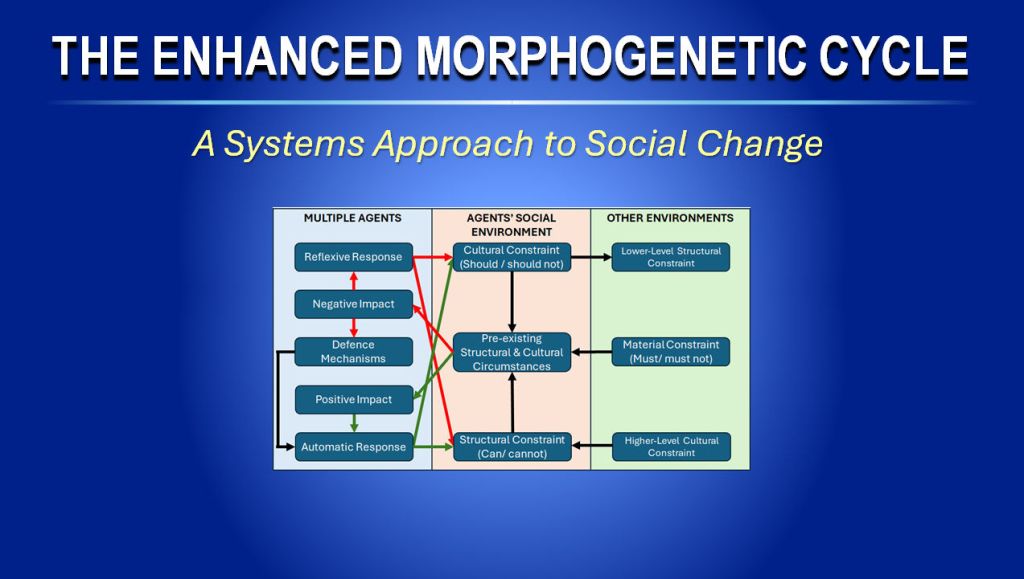
At its heart, the article examines the Modified Morphogenetic Cycle, an original extension of Margaret Archer’s framework, which includes the often-overlooked interplay between human cognition and the natural environment. This innovation provides a comprehensive model to understand how individual schemata, shared tropes, and societal culture influence, and are influenced by, our surroundings.

Key highlights include:

  • Schemata as Cognitive Foundations: How individual mental frameworks shape beliefs and behaviour.
  • Tropes and Cultural Patterns: The emergent collective structures that guide societal values and norms.
  • Dynamic Interactions: How culture and societal structures evolve through individual agency and collective action.
  • Implications for Change: Practical applications for interdisciplinary collaboration, problem-solving, and fostering innovation in an ever-changing world.

This article not only explains these concepts but demonstrates their application to real-world challenges, from gender equality to environmental sustainability. Whether you’re a researcher, educator, or curious thinker, this exploration offers tools to bridge divides and create meaningful change. For the full article, please visit https://rational-understanding.com/my-books#a-deep-dive or https://www.academia.edu/126718325/A_Deep_Dive_into_Beliefs_Schemata_Tropes_and_Culture

Categories
08. The Illusion of Autonomy in Belief Formation

The Illusion of Autonomy in Belief Formation

Introduction

We often like to think of ourselves as independent thinkers, masters of our own beliefs, immune to the influences of social pressures, peer groups, advertising, and political spin. Yet, beneath this comforting illusion of autonomy lies a complex web of external forces that shape our beliefs, often without our conscious awareness. Recognising these influences is not a concession to vulnerability but a step toward deeper understanding and authentic belief alignment.

Why We Believe We Are Autonomous

The perception of autonomy is deeply tied to our sense of identity. Western cultural narratives emphasise personal freedom and self-determination, encouraging the belief that our thoughts and values are self-generated. This illusion is bolstered by cognitive biases, such as the self-attribution bias (crediting ourselves for successes, including our “correct” beliefs) and confirmation bias (seeking evidence that reinforces what we already think).

Emotions also play a central role in fostering this illusion. Beliefs often serve to satisfy emotional needs, such as the need for security, belonging, or self-esteem. For instance, fear and anxiety might push someone toward beliefs that feel comforting, even if they diverge from reality.

What we often fail to acknowledge is that many influences operate unconsciously. Early childhood socialisation, media messaging, and peer group pressures become embedded in our thought processes, shaping beliefs that we feel are entirely our own. Moreover, in today’s world, technology, especially social media algorithms, amplifies this issue by creating echo chambers that reinforce existing beliefs while suppressing dissenting views.

Examples of Hidden Influences

  • Childhood Socialisation: Imagine someone raised in a community with strong traditional values. As an adult, they may staunchly defend these values, believing they arrived at them independently. Yet, these beliefs were likely instilled in childhood and reinforced through familial and cultural norms.
  • Peer Pressure in Adolescence: A teenager might adopt certain fashion trends or political opinions to fit in with their social group, believing their choices to be personal. In reality, the need for acceptance and belonging often overrides independent thought during this stage.
  • The Power of Advertising: Consider the individual who buys a luxury car, claiming it reflects their unique taste and personality. Advertising campaigns often link products to our need for status or individuality, subtly shaping consumer choices.
  • Political Spin: Political campaigns frequently use emotionally charged language to frame issues. A voter might adopt a belief based on a politician’s rhetoric, convinced they’ve arrived at their stance through careful reasoning when, in fact, emotional appeals have played a significant role.
  • Social Media Echo Chambers: Algorithms curate content that aligns with a user’s past behaviour, creating a feedback loop that reinforces existing beliefs. Someone who frequently interacts with conspiracy theories might find their feed saturated with similar content, further entrenching those views.

Why This Matters

Believing we are immune to external pressures makes us more susceptible to them. If we fail to recognise how socialisation, media, and cultural norms shape our beliefs, we risk being manipulated by persuasive forces. Moreover, this misconception can hinder personal growth, as we resist questioning long-held beliefs out of fear of losing our sense of self. Recognising the impact of cultural contexts is also essential. In individualistic societies, autonomy is emphasised, but in collectivist cultures, beliefs are often shaped by group harmony and social roles. Understanding these variations helps foster empathy and nuance in assessing belief formation.

How to Break the Illusion

To reclaim genuine autonomy, we must engage in practices like Motivational Reflexivity. This reflective process involves questioning the beliefs that motivate us and identifying the external factors that lead to those beliefs. Here’s how it works:

  • Ask Reflective Questions:
    • Why do I hold this belief?
    • Who or what might have influenced it?
    • Does this belief align with observable evidence or fulfil an emotional need?
  • Identify Patterns:
    • Look for recurring themes in the sources of your beliefs, such as media messaging, peer group norms, or early childhood teachings.
  • Seek Diverse Perspectives:
    • Expose yourself to alternative viewpoints to challenge biases and broaden your understanding.
  • Test Beliefs Against Reality:
    • Compare your beliefs with objective evidence and evaluate their validity.

For example, someone reflecting on their belief in a brand’s superiority might trace it back to advertising that equates the product with social status. By critically examining this influence, they can decide whether the belief truly aligns with their needs or values.

Moving Forward

Acknowledging the interplay between external influences and personal beliefs isn’t about relinquishing control; it’s about gaining clarity. By embracing tools like Motivational Reflexivity, we can align our beliefs with objective reality while fostering a deeper connection to our authentic values. Beyond individual growth, this practice can contribute to societal progress by promoting media literacy, critical education, and resistance to manipulation.

By understanding and challenging the illusion of autonomy, we empower ourselves to make more informed, authentic, and pro-social choices. The journey toward genuine autonomy begins with self-awareness and the courage to question what we hold as true.

Further Reading

  • “The Case for Motivated Reasoning” by Ziva Kunda (1990): Explores how psychological needs shape reasoning processes.
  • “A Theory of Cognitive Dissonance” by Leon Festinger (1957): Examines how individuals reconcile conflicting beliefs and behaviours.
  • “Thinking, Fast and Slow” by Daniel Kahneman (2011): Provides insights into automaticity and how unconscious biases influence decisions.
  • “Structure, Agency, and the Internal Conversation” by Margaret S. Archer (2003): Discusses reflexivity and its role in shaping beliefs and behaviours.
  • “Propaganda and the Public Mind” by Noam Chomsky (2001): Analyses the influence of media and political messaging on public opinion.
  • “Human Scale Development” by Manfred Max-Neef (1991): Offers insights into needs, satisfiers, and the alignment of beliefs with well-being.
  • “The Elephant in the Room. Silence and Denial in Everyday Life” by Eviatar Zerubavel (2006): Explains how psychological defence mechanisms can become cultural norms and how denial can itself become the subject of denial.
Categories
07. Preventing the Leveraging of Religious and Ideological Beliefs

Preventing the Leveraging of Religious and Ideological Beliefs

Religion is a double-edged sword. On the one hand, it can assuage our otherwise unsatisfiable existential needs, i.e., the need to escape death, the need for meaning and guidance, and the need to escape our ultimate state of isolation. On the other hand, autocrats can gain and retain wealth, power and influence by leveraging our religious beliefs. This is particularly the case for religions that emphasise obedience to the will of God. Throughout history autocrats have claimed to be a conduit for the will of God, from Egyptian Pharoahs and Incas, through popes and kings, to those of the present day.

The current rise of humanism/secularism in the West and its global expansion poses a threat to autocrats who rely on religious obedience by the population for their status. This results in internal stresses within nations where beliefs are divided. It also results in stresses between nations.

Ideologies such as communism, capitalism and nationalism, also inculcate beliefs. Nationalism, for example, often posits that members of the population owe allegiance only to fellow nationals and not to citizens of other nations. Leaders can also leverage ideological beliefs in their own interest. The rise of liberal democracy poses a threat to their status and similar internal and international tensions can arise as a result.

Frequently, a combination of both religious and ideological beliefs are leveraged. The checklists that can be downloaded here will enable you to assess the likelihood of such leverage by aspiring leaders, and its existence in organisations, political parties, and nations. The fewer safeguards there are the more likely it is that the leverage of our beliefs is occurring or will occur. In the case of aspiring leaders, it is the extent to which they value these safeguards that should be considered.

Categories
06. Unifying Folk Theories of Social Change through Margaret Archer's Morphogenetic Cycle

Unifying “Folk Theories” of Social Change Through Margaret Archer’s Morphogenetic Cycle

Introduction

The internet is brimming with intuitive “folk theories” of social change, often shared on platforms like LinkedIn, YouTube, and personal blogs. These theories, ranging from grassroots mobilisation to social entrepreneurship, typically reflect a genuine desire to address societal and environmental concerns. However, they often appear fragmented, competing, or anecdotal, and can be dismissed for lacking rigorous scientific backing.

Yet “folk theories”, although lacking academic foundations, should not be dismissed. Frequently, they are based on the empirical observation of real-world events and draw on their proponents’ practical experience of dealing with them.

What if these theories could be unified under a scientific framework? Margaret Archer’s Morphogenetic Cycle, a sociological model explaining how social structures, cultural systems, and human agency interact over time to yield social change, provides just such a foundation. By grounding these “folk theories” in Archer’s model, we can see them not as disparate or competing ideas but as complementary strategies in the dynamic process of societal transformation.

Archer’s Morphogenetic Cycle: A Quick Overview

Margaret Archer’s Morphogenetic Cycle is a framework for understanding how structure (societal organisation), culture (our values norms and beliefs), and agency (our ability to make decisions and act on them) interact to bring about either social stability (morphostasis) or change (morphogenesis). The cycle comprises the perpetually ongoing repetition of four key components:

  • Structural and Cultural Conditioning: Existing social structures (e.g., institutions) and cultural systems (e.g., norms, values) shape the opportunities and constraints for individual human action.
  • Individual Reflection: individuals reflect on these opportunities and constraints deciding whether they support them or wish to alter them.
  • Social Interaction: Human agents, individually or collectively, act within and upon social structures and cultural systems. Their actions can reinforce the status quo or challenge it.
  • Structural and Cultural Elaboration: As a result of these actions, structures and cultures are either reproduced (stability) or transformed (change).

This cycle allows us to see how individual and collective actions contribute to societal transformations over time.

Folk Theories: Intuitive Strategies for Social Change

On platforms like LinkedIn, countless individuals and organisations promote strategies for social change, often without connecting them to established scientific theories. These include:

  • Personal Empowerment and Leadership: Advocating for individual growth as a precursor to societal transformation.
  • Grassroots Mobilisation: Encouraging community-based action to address systemic issues.
  • Social Entrepreneurship: Combining innovation with profit motives to tackle social problems sustainably.
  • Digital Activism: Leveraging online platforms to amplify voices and drive awareness.
  • Conscious Consumerism: Using ethical consumption to push corporations toward social responsibility.
  • Mindfulness and Cultural Transformation: Promoting inner change to inspire collective shifts in values and beliefs.
  • Network Building and Collaboration: Creating alliances across sectors to drive unified action.

While these approaches can be labelled as “folk theories” and critiqued for lacking scientific rigor, they align closely with Archer’s model.

The Unifying Power of the Morphogenetic Cycle

When viewed through the lens of the Morphogenetic Cycle, these strategies are not random or competing but rather complementary tools for leveraging different phases of societal change:

  • Personal Empowerment and Leadership focuses on building agency, a foundational element of Archer’s model, enabling individuals to act within and upon social structures.
  • Grassroots Mobilisation emphasises collective agency, where groups challenge structures and initiate morphogenesis.
  • Social Entrepreneurship introduces innovative ideas that reshape cultural norms and structural systems, contributing to structural and cultural elaboration.
  • Digital Activism amplifies agency and accelerates cultural morphogenesis by spreading new values and narratives.
  • Conscious Consumerism enables individual choices to cumulatively drive structural adjustments and the transformation of existing systems.
  • Mindfulness and Cultural Transformation directly addresses cultural conditioning, altering values and beliefs to prepare society for deeper systemic change.
  • Network Building and Collaboration strengthens collective agency and creates synergy across sectors, making structural and cultural elaboration more impactful.

By recognising these connections, we can move beyond fragmentation and foster collaboration among the proponents of “folk theories”, uniting their efforts under the scientifically grounded Morphogenetic Cycle.

Morphostasis or Morphogenesis: The Choice is Ours

Not all societal transformations are progressive. Without coordination, these strategies can work at cross-purposes or fail to achieve meaningful impact. By understanding the Morphogenetic Cycle, we can:

  • Avoid Fragmentation: Proponents of “folk theories” can see their strategies as complementary rather than competing.
  • Encourage Collaboration: Networks of activists, entrepreneurs, and thought leaders can align their efforts to maximise impact.
  • Target Specific Phases of Change: By identifying where a society stands in the Morphogenetic Cycle, efforts can be tailored to either challenge existing systems or reinforce positive stability.

Call to Action

To the proponents of “folk theories” promoting social change: your strategies have value and intuitive wisdom. By connecting them to Margaret Archer’s Morphogenetic Cycle, you can deepen their impact, gain credibility, and collaborate more effectively.

To researchers and educators: help bridge the gap between theory and practice. By making the Morphogenetic Cycle more accessible, you can empower these change-makers with a scientific framework for their work.

Social change is a complex, dynamic process. The more we understand and collaborate, the more effective we will be in shaping a society that reflects our shared values and aspirations. Together, we can transform fragmented folk theories into a unified movement for meaningful change.

If you are interested in being a part of this, then please join the Motivational Reflexivity Network on LinkedIn or Facebook where you can learn more about the Morphogenetic Cycle and begin the conversation.

https://www.linkedin.com/groups/13114517/

https://www.facebook.com/groups/1486884782057726

Categories
05. Guidance for Trainers

Motivational Reflexivity: Guidance for Trainers

Guidance for trainers in Motivational Reflexivity is now available for free download at:

https://rational-understanding.com/my-books#guidance-for-trainers

https://www.academia.edu/125567212/Motivational_Reflexivity_Guidance_for_Trainers

Your comments, criticisms and suggestions for improvement are, of course, welcomed.

Ideally, before embarking on the training of others you should read the Guidance for Practitioners and also gain some experience of the practice yourself.

Categories
04. Understanding Social Change

Understanding Social Change: Margaret Archer’s Morphogenetic Approach

In today’s world, where rapid shifts and long-standing transformations constantly reshape society, Margaret Archer’s Morphogenetic Approach provides an insightful framework for understanding how and why these changes occur. Archer’s theory blends two powerful drivers of change: the immediate impact of crises and the gradual force of cultural evolution.

The Morphogenetic Approach: A Dynamic Model of Change

At its core, the Morphogenetic Approach emphasises that societies are not static; they continuously balance between forces of stability (morphostasis) and forces of transformation (morphogenesis). Archer’s framework views social change as a cycle involving structure, culture, and agency (the choices and actions of individuals and groups). These elements interact in ways that either maintain the status quo or drive change.

The key to Archer’s approach is recognising that social change often emerges from a combination of slow, cumulative shifts in cultural values and sudden, disruptive events or crises.

Change Through Crises: Shock-Driven Transformations

Crises, whether economic, environmental, political, or social, act as powerful catalysts for immediate change. In Archer’s Morphogenetic Cycle, crises create a state of instability, exposing the weaknesses or tensions in existing structures and norms. For example, events like economic recessions, wars, or pandemics disrupt daily life and often prompt societies to rethink and restructure. These shocks can lead to rapid transformations in governance, social policies, or cultural practices as societies seek to adapt and restore stability.

Archer’s framework highlights that while crises trigger change, their impact is shaped by the broader context: how agents respond and what cultural or structural elements already exist. After a crisis, the need for quick solutions often accelerates long-standing issues or cultural shifts that have been simmering under the surface.

Cultural Evolution: The Power of Gradual Change

While crises provoke immediate change, cultural evolution represents the slow but steady accumulation of social change over time. Values, norms, and practices evolve gradually, often without immediate disruption. For instance, shifts in attitudes toward equality, environmental sustainability, or technology influence society’s trajectory long before they lead to visible transformations in policy or behaviour.

Archer emphasises that this gradual cultural evolution builds up a latent pressure for change, setting the stage for future transformations. When a crisis occurs, these cultural shifts often come to the forefront, giving a sense of direction to the post-crisis adaptations. In other words, cultural evolution is the groundwork that makes societies ready for change when crises hit.

A Cyclical and Interdependent Process

In the Morphogenetic Cycle, change through crises and cultural evolution are interdependent. As cultural values evolve, they make society more susceptible to or resilient against certain types of crises. When crises occur, they provide opportunities to accelerate cultural shifts that were already underway. This cyclical process—where slow changes meet sudden shocks—creates a dynamic, ever-evolving society that adapts to its environment and reshapes itself over time.

Why Archer’s Theory Matters

The Morphogenetic Approach helps us understand why social change often seems both inevitable and unpredictable. It acknowledges that while deep-rooted values gradually shift, sudden disruptions can alter our world almost overnight. By recognising the importance of both crises and cultural evolution, Archer’s model gives us a comprehensive view of social change that resonates with the complexities of real-world societies.

In a world facing constant challenges, from climate change to technological revolutions, Archer’s Morphogenetic Approach reminds us that change is not only possible but natural—and that our societies are constantly evolving, shaped by the interplay of crises and culture.

Continuing Archer’s Work

Archer’s theory remains influential, continued today by scholars within the Critical Realism Network https://www.facebook.com/groups/criticalrealismnetwork, who apply her ideas to explore and address contemporary challenges.

Categories
Uncategorized

Join the Motivational Reflexivity Community

Two Motivational Reflexivity Community groups have been created on LinkedIn and Facebook, where you can ask questions, share your experiences, provide feedback, and stay updated on developments. These groups are open to all who are interested in deepening their understanding of Motivational Reflexivity and connecting with others practicing this approach.

These resources and community spaces are free to access. Feel free to download, engage, and share the links with anyone who might benefit. Your participation and feedback are invaluable as we build a supportive community around this practice.

In the longer term, I am planning to produce guidelines for trainers, a dedicated website, and online training courses, all of which will be free to share and use. Their availability will be announced here and in the Facebook and LinkedIn groups.

Categories
02. Guidelines for Practitioners

New Resources on Motivational Reflexivity Now Available for Download

I’m pleased to announce that two essential resources on the concept of Motivational Reflexivity are now available for free download. For those interested in understanding and practicing motivational reflexivity, both an Introduction to the Concept and Guidance for Practitioners are now accessible in PDF form.

What is Motivational Reflexivity?

Motivational Reflexivity is a process that enables individuals to reflect on and refine their beliefs, aligning them more closely with reality and pro-social values. By examining the motivations behind beliefs, practitioners can gain a deeper understanding of their influences and transform those that may not serve their well-being. This practice is designed to benefit not only individuals but also foster positive impacts on society and the environment.

Resources Available for Download

  1. An Introduction to Motivational Reflexivity: This introductory guide provides an overview of the foundational principles, offering readers a strong starting point for understanding the motivations and needs driving their beliefs.
  2. Motivational Reflexivity: Guidance for Practitioners: This comprehensive guide offers step-by-step guidance on the practice of motivational reflexivity, with exercises, prompts, and reflections designed to support practitioners in their journey.

These resources are free to download and provide a valuable starting point for anyone interested in exploring motivational reflexivity. Feel free to share these links with anyone who might benefit from this practice. Your engagement and feedback are always appreciated as we build a community around this important work.

In the longer term, I am planning to produce guidelines for trainers, a dedicated website, and online training courses, all of which will be free to share and use. Their availability will be announced here.