Emergent Properties
In systems theory, an emergent property is a characteristic that arises at the level of a system but is absent in its individual components. This is commonly seen in nature, physics, and social systems. The classic example of an emergent property is, of course, consciousness. The human mind is conscious, but its component neurons are not.
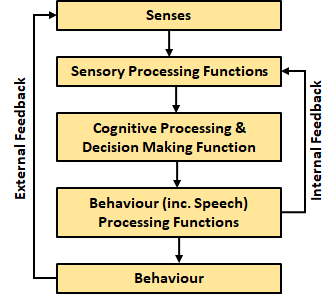
Much has been written about emergent properties and the concept is a keystone in systems science. They are generally thought to have a causal basis and to be a consequence of interactions between the component parts. For example, there is much scientific evidence that consciousness is due to feedback through our sensory processing centres thereby making us aware of our own thoughts. Some of this evidence is discussed at https://rational-understanding.com/2021/10/22/consciousness/
Vanishing Properties
But what of the complementary concept: disappearing or vanishing properties? There appears to be little, if any, awareness or discussion around this concept in the systems community. Yet the concept not only exists but also has a significant impact on the reality that we experience. Perhaps, it is because vanishing properties are often more easily explained than emergent ones, which to this day, seem to have a mystical aura around them? Vanishing properties are crucial for understanding why large-scale social and environmental problems persist despite widespread individual concern.
Vanishing properties occur when attributes present in individual components fail to manifest at the system level. For example, atoms consist of positively charged protons and negatively charged electrons. While the individual components have a charge, a neutral atom as a whole exhibits no net charge, effectively “cancelling out” this property.
While emergent properties have long been studied in systems science, the concept of vanishing properties remains underexplored. Yet, understanding how responsibility, action, and ethical concern can disappear in collective settings is crucial for tackling today’s most pressing social challenges from climate change to political engagement.
Before discussing practical examples of vanishing properties in society, I would first like to mention the work of two important figures in the field: Floyd Allport and Albert Bandura.
Floyd Allport
Floyd Allport (1890–1978) was a pioneering figure in social psychology, known for emphasising the importance of individual behaviour in social contexts. His work is highly relevant to the concept of vanishing properties in the social context, particularly in understanding how individual behaviours fail to manifest at the collective level. His rejection of the “group mind” aligns with the idea that societal patterns arise from the actions (or inactions) of individuals, rather than from some mystical or autonomous group entity. This perspective is crucial in explaining why individual responsibility or intention can disappear in collective settings, a key characteristic of vanishing properties.
For example, Allport’s research on social facilitation and inhibition provides insight into how people’s behaviour changes when they are part of a group. In some cases, the presence of others enhances individual performance (social facilitation), but in more complex or high-pressure situations, individuals may withhold action, assuming that others will take the lead (similar to the bystander effect). This can explain why personal responsibility for addressing issues like climate change, political activism, or poverty may vanish in large social settings. Individuals assume that their contributions are insignificant or that others will step in.
Allport’s emphasis on individual responsibility in collective settings influenced later research on diffusion of responsibility, groupthink, and social loafing, phenomena where action diminishes as group size increases.
Albert Bandura
Albert Bandura (1925–2021) was a pioneering psychologist best known for his work on social learning theory, self-efficacy, and moral disengagement. Later in his career, Bandura developed the theory of moral disengagement. This concept, which has been applied to understanding everything from corporate misconduct to social and environmental inaction, explains how individuals rationalise harmful or unethical behaviour, allowing them to detach from personal responsibility in a collective setting. It helps to explain why moral responsibility can vanish at the group level, even when individuals personally recognise an issue as wrong. Bandura identified several ways in which moral disengagement operates, including diffusion of responsibility, dehumanisation of victims, and euphemistic labelling, where harmful actions are framed in neutral or positive terms.
An example of the latter is Russia’s “special military operation” in Ukraine. By using this term, the Russian government avoided the more negative connotations of “war” or “aggression,” which could trigger stronger domestic and international opposition. This euphemistic language helped to justify the military action, downplay its severity, and align public perception with the government’s narrative, making it easier for individuals to morally disengage from the real human suffering and destruction involved.
Another example of euphemistic labelling is found in corporate ‘greenwashing,’ where companies reframe environmentally harmful practices in misleadingly positive terms. For instance, airlines advertising ‘carbon-neutral flights’ often rely on questionable carbon offset schemes rather than reducing emissions.
Vanishing Properties in Society and Their Impact
In sociology, vanishing properties explain why problems arise with collective action. Despite individual awareness and concern, collective action often fails to materialise. Some examples of this effect are given below.
1. Climate Change and the Diffusion of Responsibility (The Bystander Effect)
The bystander effect is a psychological phenomenon where individuals are less likely to help someone in distress when others are present. They assume that someone else will take responsibility. The term was coined by John Darley and Bibb Latané in 1968 after their research on the murder of Kitty Genovese, where multiple witnesses reportedly failed to intervene. Their studies demonstrated that the presence of others leads to diffusion of responsibility, reducing the likelihood of individual action.
In the case of climate change, many individuals recognise it as a major issue and take small actions, e.g., recycling or reducing plastic use. However, many also believe their personal contributions are insignificant in the grand scheme, leading to widespread inaction. This results in what Garrett Hardin referred to in his 1968 essay as “The Tragedy of the Commons”. Resources become depleted because individuals have no incentive to limit their consumption and assume that others should take responsibility.
2. Political Apathy and Pluralistic Ignorance
Many individuals may privately disagree with an unjust policy or social norm but assume that others support it. Since no one openly challenges the status quo, it remains unchallenged, even if many oppose it internally. The result can be that policies and social structures persist even when the majority oppose them, as seen in past civil rights struggles and modern political apathy.
3. Voting and the Perceived Irrelevance of One Vote
A single individual’s vote has a small chance of changing the outcome of an election. However, if many people believe their vote does not matter, turnout decreases, affecting the result. The consequence can be low voter participation, the weakening of democracy, and unrepresentative governance.
4. Poverty and Compassion Fatigue
The concept of vanishing properties can also apply to the effect of group, as opposed to individual, issues on people. For example, when we hear about one specific person in need, we often feel empathy and a desire to help. However, large scale poverty can feel overwhelming, leading to a sense of powerlessness and disengagement. The consequence can be “compassion fatigue,” where we shut down emotionally in response to large-scale suffering.
Countering Vanishing Properties: Strategies for Social Change
While vanishing properties explain societal inertia, history has shown that effective strategies can counter this. Some examples of successful strategies are given below.
1. Climate Change: Social Norms and Behavioural Nudging
Sweden combined policy (carbon taxes) with visible social norms, such as increased bicycle lanes and renewable energy promotions. As people saw others adopting eco-friendly behaviours, individual actions reinforced collective responsibility rather than it vanishing.
While some argue that climate solutions require systemic action rather than individual behaviour changes, research shows that visible shifts in social norms can influence both policymakers and industries to adopt stronger regulations.
2. Political Activism: Breaking Pluralistic Ignorance
In early 20th-century Britain, many women privately supported suffrage but hesitated to voice their views due to societal norms. The Suffragettes’ public demonstrations, hunger strikes, and acts of civil disobedience helped break pluralistic ignorance. As more women openly demanded the right to vote, it became clear that widespread support existed, leading to legislative change with the 1918 Representation of the People Act.
3. Voting and Civic Engagement: Social Accountability
Studies have shown that making voting visible, e.g., posting about it online or wearing “I Voted” stickers, increases participation. Public visibility shifts voting from an isolated act to a socially expected norm, preventing individual effort from disappearing.
Sustained collective identity is crucial in overcoming vanishing properties. Social movements succeed when individuals feel part of a shared cause, reinforcing participation over time.
4. Poverty: Personalising the Narrative
Research has shown that people are more likely to donate or act when shown a single individual’s story rather than abstract statistics. Charities like Save the Children highlight personal narratives, making people feel that their actions have a direct impact.
Conclusion: Transforming Individual Concern into Collective Action
The concept of vanishing properties provides a powerful lens for understanding why major societal problems persist despite widespread concern. By recognising these dynamics, we can design interventions that restore personal responsibility at the collective level rather than letting it disappear.
Key takeaways:
- Make action visible: Seeing others act reinforces personal responsibility.
- Encourage small commitments: Micro-actions, like public pledges, create momentum.
- Break the silence: When individuals speak out, they empower others to do the same.
- Personalise large issues: Framing problems around individual stories makes them more relatable.
Understanding vanishing properties not only explains why change is hard, but also offers clear strategies to turn awareness into action. The challenge lies not in whether people care, but in ensuring that care translates into meaningful collective impact.

 Rational-Understanding.com