Psychopathic personalities can have a major influence on human society, and it is sensible therefore to understand their nature and be able to identify them. The Society for the Scientific Study of Psychopathy says that “the psychopathic personality is NOT equivalent to: violence, serial killing, psychosis, mental illness, psychopathology in general, or antisocial personality disorder.” Rather, it is a collection of traits. These traits were identified by Scott Lilienfeld and Brian Andrewsin their Psychopathic Personality Inventory as:
A lack of empathy and a sense of detachment from others for the sake of achieving one’s own goals.
The ability to charm and influence others.
A distinct lack of emotion, guilt, or regard for others’ feelings.
A difficulty in planning ahead and considering the consequences of actions.
An eagerness for risk-seeking behaviours and a lack of the fear that normally goes with them.
Inability to take responsibility for one’s actions and instead blaming others or rationalising one’s behaviour.
A disregard for social norms and culturally acceptable behaviours. This includes dishonesty and manipulativeness.
A lack of typical marked reactions to traumatic or otherwise stress inducing events.
Recent research which will be described in a future article has, however, cast doubt on the view that all psychopaths lack empathy.
The Society for the Scientific Study of Psychopathy goes on to say that “Although psychopathy is a risk factor for physical aggression, it is by no means synonymous with it. In contrast to individuals with psychotic disorders, most psychopaths are in touch with reality and seemingly rational. Psychopathic individuals are found at elevated rates in prisons and jails but can be found in community settings as well.”
They appear to lack the instinct which enables us to form co-operative groups, and the conscience which enables these groups to function successfully. Thus, they do not suffer the mental conflicts and stress experienced by others in attempting to balance the interests of the group with the shorter-term interests of the self. This lack of a group forming instinct means that normal social rules do not apply when interacting with them.
Nevertheless, a psychopathic personality can gain power for several reasons.
The traits that they display can be mistaken for those of an ideal leader. For example, their manipulative traits can be mistaken for the ability of successful leaders to influence others. Their lack of emotional connection and empathy can be mistaken for a leader’s ability to make tough decisions. Their grandiose behaviour can be mistaken for the confidence expressed by successful leaders.
Their charm, calm demeanour, tolerance of uncertainty and apparent confidence makes them seem to be an ideal charismatic leader in times of disruption and uncertainty. However, if an organisation lacks rules or structure, they can take advantage of this.
Finally, Selfish psychopathic traits will not stand out and may be rewarded in an organisation where competition, individualism, profit, and short-termism prevail.
So, status has a part to play in where psychopathic personalities can be found. Research has shown that the higher in an organisation a person is, the more likely they are to have psychopathic traits or to have had experience of someone with them. Researchers have found high levels of psychopathic traits in British CEOs and US presidents.
Workplace culture also has a part to play. Workplace psychopaths can be found more often in banking, finance, commerce, business, the civil service, the law, the police, and the fire service, and less often in the caring professions.
Gender may also have a part to play. There appears to be a greater risk when an organisation is largely male. However, this does not necessarily mean that women are less likely to be psychopathic than men. Rather, women are more likely to work in the caring professions. So, it may be that their workplace culture is less likely to accept such people in leadership roles.
Finally, there appears to be a greater risk of a workplace psychopath being appointed if the organisation is under pressure and change is necessary.
References
Lilienfeld, S. O., & Andrews, B. P. (1996). “Development and preliminary validation of a self-report measure of psychopathic personality traits in noncriminal population.” Journal of Personality Assessment.
This article comprises the posts that I made in Facebook’s Cultural Speciation chat from 11/9/23 to 25/9/23.
During my work on social systems theory, I have been struck by similarities between the behaviour of individuals, organisations, and nations, i.e., by the isomorphisms. An example is, personal denial vs. cultural denial. The latter is also known as co-denial or conspiracy of silence. Because of these isomorphisms, I now treat the organisation, in in its most general sense, as the fundamental holon in social systems theory.
The phrase “cultural evolution” is often thought of as being merely metaphorical. However, very real isomorphisms do appear to exist between biological evolution and cultural evolution. Examples include cultural speciation, cultural co-evolution, sub-cultures vs. sub-species, and so on. As cultural evolutionary principles appear to explain much of what is going on in the world today, I would like to begin a discussion with a view to developing the concept further.
More on this topic can be found at: the World values Surveys website at https://www.worldvaluessurvey.org/ ; and in the excellent book “Cultural Evolution” by Ronald Inglehart.
Cognitive Physicalist Philosophy.
I developed this philosophy during my 23 years of work on mathematical logic. It was the only approach that enabled me to join up the various branches of logic into a single, consistent, and relatively simple system. This philosophy underpins the steps that will follow.
The cognitive perspective holds that we are our minds and cannot escape the constraints imposed by their biology and evolutionary history. Nevertheless, human cognition is a reasonably accurate representation of reality. If it were not, then it is unlikely that our species would have survived to be as successful as it is. Physicalism holds that space-time comprises the whole of reality and that everything, including abstract concepts and information, exists within it. Nothing transcends the laws of nature or occupies somewhere other than space-time.
The Nature of Information.
Information is physical in nature. It is not merely conveyed by matter and energy; it is integral to it in the form of order and structure. Information exists at source i.e., within the original physical entity. It is formed of meaningful component parts within that entity and the relationships between them. For an entity to be meaningful it must be structured in a way that recurs. This is an evolutionary trait that enables us to recognise recurring entities and, when we encounter them in the future, predict their behaviour, including any opportunities or threats. If an entity is meaningful, we associate the information that it contains with a sense image (icon) and in a symbolic form compatible with our minds. This enables us to remember entities and the associations between them. Finally, we translate information in that form into a symbolic form that can be communicated to others, e.g., words, thereby sharing our knowledge of an entity’s behaviour. In this latter form information can be replicated.
The ability to recognise and process information in this way is a property that emerges with life. This property applies only to living beings and some of their artifacts. It does not apply to other non-living physical entities.
Information at source is, by definition, always true. However, there are many ways in which mentally processed and communicated information can become false.
Basic Biological Evolution.
There are two main features of an organism: its genotype, i.e., the genetic constitution of the organism, and its phenotype, i.e., the manifestation of that design and the observable characteristics of the organism. The organism’s genotype is information that can be replicated and translated. It is the organism’s design. The phenotype is a consequence of this design as influenced by environmental circumstances.
Biological evolution has two main components, random mutation, and natural selection. Random mutation acts on an organism’s genotype and can, for example, be caused by radiation, viruses or copying errors during replication. Most random mutations are harmful, many are neutral and a few beneficial.
Natural selection operates on the phenotype. Under selective pressures from the environment organisms with harmful mutations often expire or fail to reproduce whilst those with beneficial mutations tend to propagate. Neutral mutations can persist in a population’s variable genome and can manifest themselves in the form of sub-species. Later, if the organism’s environment changes, they may prove beneficial or harmful and either propagate or expire.
Isomorphism between Biological and Cultural Evolution.
Society has two main features which are very similar in nature to those of the organism. Firstly, there is its culture. This includes values or those things that we hold good or bad; norms or codes of acceptable and unacceptable behaviour; and beliefs. They are all information held in the mind and socially propagated. They comprise a society’s design and are the equivalent of the biological genome.
Secondly, there is the practical manifestation of culture, in the form of society itself. This manifestation is a consequence of both culture and environmental circumstances. So, the manifestation of society can be regarded as the equivalent of the biological phenotype.
Culture is also subject to mutation. This can be caused by new knowledge, ideas and understanding; changes in the social and natural environment; communication errors; and even deliberate interventions such as propaganda and advertising.
Again, some of these mutations are harmful, some neutral and others beneficial. Theoretically, social processes should tend to cause those that are beneficial to propagate, those that are harmful to expire, and those that are neutral to remain as variations. However, deliberate intervention can propagate harmful cultural mutations. It is noteworthy that our interventions have also been biological. We have deliberately intervened in the genome of some organisms via selective breeding and, more recently, direct genetic modification has become possible.
In some circles culture is known as a memeplex with individual parts known as memes. However, the meaning of the word meme has changed with the advent of the internet, so I now avoid using it.
Biological and Cultural Speciation.
Biological speciation is the formation of new and distinct species through the process of evolution. Two main factors are involved, the accumulation of viable genetic mutations and geographical or environmental separation. In the case of geographical separation, members of a species come to occupy different parts of the world and can no longer interbreed. In the case of environmental separation, they come to occupy different environments, e.g., the trunk or branches of a tree, and again can no longer interbreed. This allows different mutations to accumulate in each group.
Initially this can result in a sub-species. That is, a group of organisms with identifiable differences from the parent species, but which nevertheless hold most of their genome in common with it and remain able to interbreed with it. If separation ceases a sub-species may be absorbed into the parent species. If separation continues it may diverge from the parent species as genetic differences accumulate, and ultimately may be unable to interbreed with it, thus forming a separate species.
A similar process can occur in society. Geographical separation is the same but environmental separation can be social as well as physical. Initially, a sub-culture can form with its own distinct cultural features but nonetheless holding much in common with the parent culture. If geographical or social separation ceases, then the sub-culture can be re-absorbed into the parent culture, but if separation persists, cultural speciation can occur such that it becomes difficult for the two cultures to interact. Differences in language, values, and norms form the basis for these difficulties.
Other Support for Cultural Speciation
Another interesting parallel is as follows. Culture is held in the minds of individual people. Together these people form society. The genome is held within individual cells. Together these cells form the organism.
Cultural speciation is thought to precede biological speciation and to have occurred in early hominids. The Italian scientist, Fiorenzo Facchini suggests that “Culture probably played a double role in the process of human speciation: (1) in isolation and differentiation from other groups of hominids that did not have such behaviour; and (2) in adaptation to the environment and in communication between groups that had the same cultural behaviour, thus slowing down or preventing the conditions of isolation that lead to new species.” (Facchini, 2006)
Application of The Biological Evolution/ Cultural Evolution Isomorphism.
At present (Sept 2023) I am working on interactions in the natural world, both human and non-human. This is going well, and I am finding strong isomorphisms. The same small range of interactions exist between: different species; groups within a species, including human organisations and cultures; and individuals within a species, including people. These interactions, which include co-operation, are both consequences and drivers of the evolutionary process. So, it does appear possible to unite the social and biological sciences in a way that allows knowledge to be transferred between disciplines.
Regarding cultural evolution, this is often thought to be merely a metaphor. However, biological evolution and cultural evolution are so similar in nature that they are almost certainly the same process. So, it is likely that the knowledge that we have gained of biological evolution can be applied to society.
Finally, I should perhaps mention that, although humanity comprises different cultures, this is merely an observation. I make no value judgements as to which culture is better. In fact, such value judgements are themselves cultural.
I must admit that, because they trigger unhappy memories, I have been putting off writing the following set of articles. It is reassuring to believe that all human beings are social creatures, but unfortunately that is not the case. Some individuals with dark personalities place self-interest above all else. People of a more social nature who have had the misfortune to meet or interact with a dark individual will, as a minimum, have suffered disillusionment or a sense of injustice. They may also have suffered more material harm.
There are many reasons why we may not like to talk about dark individuals, or believe that they exist. We may blame ourselves for our misfortune or be embarrassed by it. Like me, we may wish to avoid the emotional pain of recalling it. We may prefer to maintain an illusion that such individuals do not exist and, finally, we may fear being labelled as cynics or false accusers. However, there is much objective evidence that such people do exist and can cause considerable social harm. Only if we acknowledge this can something be done about it.
The Dark Factor
The dark factor is a set of human personality traits. It is defined by the psychologists Moshagen, Hilbig, and Zettler, in their 2018 paper, “The dark core of personality”, as the tendency to maximise one’s individual utility – disregarding, accepting, or malevolently provoking dis-utility for others. In other words, looking after oneself, without concern for others, at their expense, or even whilst causing them harm.
Egoism. Excessive concern with one’s own pleasure or advantage, at the expense of community well-being.
Machiavellianism. Manipulativeness, callousness and a strategic-calculating orientation.
Moral Disengagement. A generalized cognitive orientation to the world that differentiates one’s thinking from that of others in a way that leads to unethical behaviour.
Narcissism. An all-consuming need for ego reinforcement.
Psychological Entitlement. A stable and pervasive sense that one deserves more, and is entitled to more, than others.
Psychopathy. Callousness, impulsivity, and deficits in feelings and self-control.
Sadism. Intentionally inflicting physical, sexual, or psychological pain or suffering on others in order to assert power and dominance, or for pleasure and enjoyment.
Self-Interest. The pursuit of gains in socially valued domains, including material goods, social status, recognition, academic or occupational achievement, and happiness.
Spitefulness. A preference that would harm another but that would also entail harm to oneself. This harm could be social, financial, physical or an inconvenience.
The British psychologist, Steve Taylor prefers the concept of “a “dark triad” of three personality traits that belong together: psychopathy, narcissism and Machiavellianism. This makes sense because these traits almost always overlap and are difficult to distinguish from one another. The traits exist on a continuum and are more pronounced in some people than others.”
Unfortunately, there are more ways in which something can “go wrong” than “go right”. For something to “go right” it must be ordered or structured in some way. For it to “go wrong” that order must have failed, and there are many ways in which it can do so. Thus, mental ill-health, for example, takes many forms. The same is true of the dark factor. Individuals with the above traits will have them in varying proportions. Nevertheless, we endeavour to categorise dark behaviours by their similarities. An emphasis on one will cause us to place an individual in that category. However, the correlation between these traits suggests that there is something more fundamental that unites them.
The three personality types have common features as well as their own distinct ones, as described in the Venn-Euler diagram below.
Source: D’Souza, M. F. (2016). Manobras financeiras e o dark triad: o despertar do lado sombrio na gestão (Doctoral Dissertation). São Paulo: Universidade de São Paulo. (Financial manoeuvres and the dark triad: the awakening of the dark side in management)
A notable feature of the three personality types is that some of their characteristics can be desirable in leaders, for example, the vision and charisma of narcissistists, the strategy and tactics of Machiavellians, and the creativity and good strategic thinking of psychopaths. Furthermore, there is evidence that people with dark personality traits are attracted to leadership positions (Furnham 2010). The psychologist Oliver James has identified the prevalence of these personality traits in the workplace (James 2013), and they have been found to be fairly well represented in senior management and chief executive officers (Alernic et al, 2010). Finally, the dark triad traits have been found to be associated with knowledge sabotage, i.e., the deliberate hiding of information or provision of misinformation (Serenko & Choo 2020).
There is disagreement among specialists as to whether dark behaviours are evolutionary traits or psychological disorders. However, significant research evidence suggests that they may be approximately 50% inherited in the form of a predisposition and 50% acquired. There are, for example, genes known to be linked with some of the psychopathic traits. However, psychopathy is also known to be associated with factors such as drug taking and upbringing. Irrespective of the cause, the children of people with the disorder do have a higher risk of suffering it themselves.
The evolutionary explanation for dark factors is unclear. Most evolutionary psychologists speculate that with 90% of the population interacting co-operatively, there has been scope for the evolution of free-riders, i.e., predatory individuals who will take advantage of the normal functioning of human society to meet their needs with minimum effort. However, this explanation seems unsatisfactory as it would require human beings first to evolve social traits and then a small proportion of them to revert to non-social ones.
I would therefore offer the following alternative hypothesis, which has the benefit of greater simplicity. Social behaviour in animals, including humans, has evolved. A focus on personal survival must necessarily have evolved first. Only then could survival be enhanced by social behaviour. The genes involved in social behaviour will have emerged via random mutation and then propagated through the population via natural selection. So, it seems likely, therefore, that these dark traits are a genetic hang-over from ancestor species, rather than mutations in an essentially social species. This hang-over may be because there has been a role in society for such traits that has enabled them to persist.
There are three possible reasons for this persistence, all of which may apply to some degree. Firstly, because, as mentioned above, it may have conferred an advantage on a small number of individuals in what was otherwise a social population. Two contradictory selective processes may have been in play: individual selection for non-social people and group selection for social ones, resulting in a mixed population. Secondly, dark traits may have had a role to play in group selection. Due to their lack of conscience, dark personalities can rise more easily in the social hierarchy to become leaders. Once in that position, they can enforce group cohesion by coercion. In the early stages of human society, when groups were in competition with one another, a dark leader may have improved the chances of group survival, and thus their own, through greater aggression towards other groups. It is surely no coincidence that the world is plagued by despots who gain power by appealing to tribalism and nationalism. Finally, dark personalities also tend to move from partner to partner and have a greater number of offspring whom they then abandon.
It is important to note that evolution cannot predict the future. Life evolves in response to the pressures of the present. Thus, whilst dark traits may have helped humanity to become the dominant species in the past, this is not necessarily the case for the future. Today our species is faced with several existential threats that can only be overcome through a very high level of co-operation, and this is undermined by dark behaviour.
Leaders with dark personality traits can gain power for the following reasons:
their behaviour is less constrained by concern for others;
they can be charismatic, their dark side only emerging when they are under pressure;
they can enjoy and be good at impression management;
some people are willing to follow them due to errors of judgement, self-interest, or fear; and
their environment may lack the controls to prevent such behaviour.
There is also evidence that dark personalities can be attracted to and flourish in particular types of organisation.
Once in a leadership position, they can “derail” the organisation. Organisations are usually co-operative ventures, i.e., people working together with a common aim. However, leaders with dark traits can steer the organisation in a direction more suited to their personal interest. Note that failure due to derailment and failure due to incompetence are two very different things.
Dark personalities also tend to generate a culture of negative competition. I liken this to a running race in which the competitors attempt to kick the feet out from under one another rather than trying to be first over the finish line. Obviously, this can end up in a brawl on the racetrack to the advantage of neither. In smaller relatively independent societies that competed with one another this may have been beneficial to one party, but in a larger global society it generally harms both competitors. We may once have needed dark personalities, but today they present serious risks, for example, nuclear war because of events in Ukraine, an inability to tackle climate change, and so on.
Ultimately, however, these factors lead to the ostracism or demise of an organisation with a dark leadership and associated culture.
Although much of the research on these personality types has been associated with business organisations, the same is true of organisations of all types including nations.
References
Alernic, J.H. & Craig, R.J. (2010) “Accounting as a Facilitator of Extreme Narcissism”. Journal of Business Ethics 96 (1): 79-93. doi:10.1007/s10551-010-0450-0.
Furnham, A., Richards, S.C., Paulhus, D.L. (2013). “The Dark Triad of Personality: A 10 Year Review: Dark Triad of Personality”. Social and Personality Psychology Compass 7 (3): 199-216. doi:10.1111/spc3.12018.
James, O. (2014) “Office Politics: How to Thrive in a World of Lying, Backstabbing and Dirty Tricks”. London, Vermillion. ISBN 978-1-4090-0557-5.
Serenko, A. & Choo, C.W. (2020). “Knowledge sabotage as an extreme form of counterproductive knowledge behaviour: The role of narcissism, Machiavellianism, psychopathy, and competitiveness.” Journal of Knowledge Management. 24 (9) 2299-2325. doi:10.1108/JKM-06-2020-0416.
As discussed in previous articles, hierarchies are necessary for the co-ordination of the activities of any group of people. They appear in all organisations from a small club, through a business, to a nation. Hierarchies can take one of two extreme forms, consensual or authoritarian, but most lie somewhere on a scale between the two.
Consensual hierarchies are those in which higher-status individuals display leadership qualities, compete positively for status, and are concerned for the welfare of subordinates and other stakeholders. Such higher status-individuals are voluntarily supported by the latter and able to direct the resources of the organisation with their co-operation.
Authoritarian hierarchies are those in which higher-status individuals display autocratic qualities, compete negatively for status, are self-interested rather than concerned for the welfare of subordinates and stakeholders, and if necessary use coercion to direct the use of the organisation’s resources.
Transition from a consensual to an authoritarian hierarchy
Authoritarian hierarchies can exist from day one if they are established by self-interested individuals who negotiate the support of self-interested followers. However, most hierarchies begin as consensual ones established to organise us in a common and worthwhile endeavour. For example, charities, essential services such as healthcare, food supply, water supply, and even some religions.
However, it is possible for consensual hierarchies to morph into authoritarian ones. This is not necessarily because the higher status members have a dark personality. Rather it is due to the fundamental human trait of trying to achieve our objectives efficiently, i.e., with a minimum use of personal resources. As the British historian, Lord Acton 1834 – 1902, said, “All power tends to corrupt; absolute power corrupts absolutely”.
Even in entirely altruistic organisations, higher status members generally enjoy greater benefits in the form of salaries, bonuses, and perks than lower status ones. They also have greater control over and access to the resources of the organisation. Once a degree of power is obtained, then, if an organisation’s institutions and culture permit, it can become easier to acquire personal resources by simply taking them rather than trading with others for them. However, the potential benefits do not end there. Once established as the leader of an organisation an individual can use the hierarchy they control, together with techniques such as rationalisation, to direct its resources towards the satisfaction of his, her, or their associates’ needs. Power can be misused in many ways depending on the needs of the individual who wields it. For example, in nations where there is little control over corruption, power held within an organisation can literally be sold for personal financial gain. It can also be used to trade for further advancement.
The transition from a consensual to an authoritarian hierarchy is caused by a vicious circle or feedback loop. Initially, higher status individuals may be supported voluntarily by lower status ones. However, the former can become dependent on the rewards that their status brings. Furthermore, they are in a stronger position to exploit the resources of the organisation for personal gain, and can become dependent on that too. This leads to a loss of voluntary support. In turn, this leads to the use of coercive power to maintain the hierarchy on which the leader depends. Also, if the culture and institutions of the organisation permit, it is easier to impose commands rather than negotiate the co-operation of subordinates. Thus, those in power begin to find themselves in a trap of their own making. They cannot give up power, initially because of their dependency on its rewards, but ultimately for fear of being held to account for their misdemeanors by those who replace them. So, to retain their power, they become ever more autocratic and corrupt, and thus, ever more trapped.
Once autocratic leadership is established, it becomes self-sustaining and difficult to rectify. This is because of the following:
The culture of an organisation is established by its leadership, and lower status individuals who wish to remain a part of it must comply. So, the organisation’s members become “trained” to accept autocracy as the norm.
Individuals are attracted to established organisations that appear to satisfy their needs, and so, those who pursue power, or any other benefits offered by autocracy, will be attracted to an authoritarian organisation.
Those who do give an autocratic leader their voluntary support are likely to be those who would gain similar benefits by doing so. For example, when leadership changes, they are in a position to assume the mantle.
The institutions established by an autocrat remain after their departure and can act as temptations even to a replacement with good intentions.
There is a feedback process in which authoritarian leaders alter culture and culture makes authoritarian leadership more acceptable. Russia, which has a history of authoritarian leadership including the Tsars, communism, and present day Putinism, is an example.
Strategies to disguise the transition to an authoritarian hierarchy
As the transition to autocracy takes place, those involved tend, at first, to disguise it using the following strategies.
Propaganda. This comprises lies, misinformation, and the denial of access to more reliable sources. Its purpose is to persuade followers that the leader is acting in the communal interest, when this is not necessarily the case.
Credible deniability. If pressure is applied to subordinates by, for example, suggesting potential promotion, setting targets, etc., then the more competitive among them will often “cheat” by breaking social norms or laws to achieve an outcome desired by the higher strata. Cheating can take the form of the manipulation of statistics, the misreporting of accounts, behaving unethically, etc. Often, those in the higher strata are aware that this will occur and use it as a way of achieving their ends whilst avoiding personal liability. If no records of the pressure exist, then they will be able to claim that they did not instruct their subordinates or know of their activities.
Secrecy can be used to keep the knowledge of any disproportionately high benefits from other stakeholders. Also, a strategy for acquiring and maintaining power in an organisation is to acquire valuable knowledge and keep it to oneself rather than share it. Data protection legislation and commercial sensitivity are examples of rationales used to justify this practice. Secrecy can hide many misdeeds, and a high level of secrecy by an individual or organisation is an indicator that this may be the case.
Our normal understanding of “denial” is of something practiced by an individual. In this context it was first proposed by Sigmund Freud in the 1890s. His daughter Anna Freud then went on to develop it and other related concepts in the 1930s. Personal denial is a psychological defence mechanism that protects us from suffering anxiety. People who practice denial will not accept the truth despite objective evidence and this can, for example, occur when we have a cheating partner, an addiction, or a mental health problem such as narcissism. Denial of this nature is not always a bad thing. It gives us time to psychologically adapt to a distressing situation. However, it can also cause us to fail to seek help when, for example, we are faced with a health or addiction problem.
What is less well known is that denial can also be practiced by a group of people who face a common threat that would otherwise cause them to suffer anxiety. For example, to talk about the holocaust, death or climate change is traumatic, therefore we can practice denial. Such denial by a group of people is commonly known as a “conspiracy of silence” or co-denial. However, because norms and beliefs are involved, I prefer to refer to it as “cultural denial”. The concept is explored in the excellent little book “The Elephant in the Room: Silence and Denial in Everyday Life” by the American sociologist, Eviatar Zerubavel. (Zerubavel, E. 2006)
Zerubavel argues that the reason cultural denial is not well known (and also, I would argue, his book) is that cultural denial is itself the subject of cultural denial. That is, we do not accept that cultural denial exists, do not wish to talk about it, and do not wish to hear about it, lest it cause us anxiety. There are also difficulties in identifying the existence of denial. As Zerubavel says “As one might expect, what we ignore or avoid socially is often also ignored academically, and conspiracies of silence are therefore still a somewhat under-theorised as well as under-studied phenomenon. Furthermore, they typically consist of non-occurrences, which, by definition, are rather difficult to observe. After all, it is much easier to study what people do than what they do not (not to mention the difficulty of telling the difference between simply not talking about something and specifically avoiding it.)”
Cultural denial can be extremely powerful because it is reinforced by the process of socialisation. Through this process, which can be exercised unconsciously, we learn social norms, that is, the rules of acceptable and unacceptable behaviour. If we do not follow those norms, then we are punished by our peers, by for example shunning, expressions of disgust and so on. If we do follow them then we are rewarded, by inclusion, expressions of pleasure, etc. So, if one person raises an issue which the other prefers to deny, they will experience an adverse reaction and eventually learn not to raise the matter.
Cultural denial is also reinforced by the simple fact that others are practicing it. If everyone around us appears not to recognise a problem, then we can begin to doubt the evidence before our eyes and wonder whether it is our own perception, memory, or reasoning abilities that are at fault.
Cultural denial is also linked to cultural speciation. Zerubavel observes that cultural denial can lead to us becoming distrustful of one another and is morally corrosive. There will be those who acknowledge a situation even though it causes anxiety, and those who do not even though the evidence is clear. The two groups will socialise their members and divergent cultures will begin to form. These cultures can be regarded as threats to one another, and so, their relative power is important. If one group holds much greater power, then the tendency will be for the other to be silenced. However, if the two groups are relatively equal in power, then competition will occur. This competition can increase the threat felt by both groups and can steadily escalate through a process of positive feedback. The greater the threat perceived by a group, the more effort they will put into social cohesion, and thus, the greater the threat perceived by the other group. This is similar to the evolutionary arms race between a predator and its prey, known in biology as coevolution. In the social context, it can therefore be referred to as “cultural coevolution”.
Climate change exemplifies cultural denial. Four main “denials” are involved.
Denial that climate change is taking place. This has been the situation for over a century now and denial is caused by anxiety that climate change will end our standards of living and even our lives. The Selma Morning Times reported on the 15th October, 1902, that “A Swedish Professor, Svend Arrhenius, has evolved a new theory of the extinction of the human race. He holds that the combustion of coal by civilized man is gradually warming the atmosphere so that in the course of a few cycles of 10,000 years the earth will be baked in a temperature close to the boiling point. He bases his theory on the accumulation of carbonic acid in the atmosphere, which acts as a glass in concentrating and refracting the heat of the sun.” Sufficient evidence has now accumulated for most of us to accept that climate change exists but influential deniers remain. This denial has been extensively researched for the World Bank by the American Sociologist, Kari Marie Norgaard, and she concludes with several suggestions for tackling the problem. (Norgaard, K.M., 2010)
Denial that climate change has an economic cause. This denial also still persists. It is based on the anxiety that altering the economy will lower our standards of living. The economic causes are therefore largely ignored, and, where they are not, are the topic of heated debate. To date we have used fossil fuels to power our economy. This has resulted in exponential growth. However, we now have other technologies that can do a similar job. There are also social reasons for believing that perpetual growth is unsustainable. So, this anxiety can be reduced by focussing on the positives of alternative sources of energy and planning for a more socially and environmentally friendly economy; one that involves an attitude of custodianship rather than exploitation.
Denial that many of our norms, values, and beliefs are the consequence of cultural manipulation. Culture, like the biological genome, is subject to random mutation. However, an emergent property of human beings is the ability to manipulate the values, norms, and beliefs that comprise our culture, using advertising, propaganda, etc. This is referred to as cultural manipulation. To date, this ability has been used mainly by vested interests such as businesses, politicians, and religious leaders.
The denial of cultural manipulation exists because we value free will and it would cause us anxiety to believe that our values and beliefs are not necessarily our own. Although we may be aware of cultural manipulation, its denial takes the form of believing that it is only others and not ourselves who are subject to it. This is incorrect. To give an example from personal experience, a few years ago I took part in some marketing research and watched two adverts promoting gym equipment. To say that I am unenthusiastic about physical exercise is putting it mildly. However, I was astonished to find that, after watching the adverts, I quite strongly “wanted” the equipment. Fortunately, I recognised the source of this irrational want and was able to dismiss it. So, to test for these implanted “wants” and “objectives”, I now take a minute to examine them, ask myself if they are rational, and question their source.
Examples of cultural manipulation include:
the belief among some religious groups, i.e., creationists, that, contrary to all the evidence, evolution does not exist;
the belief that evolution is purely tooth and claw competition, a view thought to have been promoted in the early and mid-20th Century to justify commercial competition, political conservatism, imperialism, and racism; and
the shift towards a consumer society, largely brought about by TV, and now smartphone advertising.
Cultural manipulation can, however, be used in a positive way to establish values and norms that are consistent with the long-term wellbeing of humanity and the ecosystem in which we live. It is not necessary to specify these values in detail. Rather, we should choose sensible fundamental ones and allow society to work out the details by the usual evolutionary process of trial and error.
The more co-operative we are, the less we are prone to negative cultural manipulation by selfish sort term vested interests, and the more successful a society is. We should therefore make negative cultural manipulation socially and legally unacceptable and use positive cultural manipulation to instil values and norms conducive to our long-term survival. However, a better understanding of the processes involved is first needed.
Denial that many of our leaders have dark personality traits. I will discuss this problem in future articles, but it is an unfortunate fact that people with dark personality traits have less empathy and fewer ethical constraints. So, they are more likely to ascend to leadership positions than others. Once in such a position, they will act in their own interest rather than in the interest of society and the environment. They will also act in the interest of the organisation from which they derive their power, by for example, prioritising profitability above all else. The anxiety associated with this denial is fear of retribution if leaders with dark traits are challenged. Retribution can, for example, be loss of employment, status, reputation, and, in some countries, even the loss of life. So, almost unanimously, we dismiss this situation as normal.
Furthermore, people with dark personality traits can be good at impression management. So, it can be difficult to recognise them and, even when we do, we run the risk of being deemed a false accuser. For example, in the recent case of the nurse and serial baby killer, Lucy Letby, senior doctors were instructed to write a letter of apology to her for repeatedly raising concerns about her. (Halliday, J. 2023)
Only when a crisis occurs, such as the Russia/Ukraine war or the invasion of the Capitol Building, do we seem to recognise a leader with dark personality traits. However, despite a vast amount of objective evidence, there is barely any recognition of this as a more general problem.
There is, of course, a causal relationship between these three denials. The dark personality traits of many leaders are responsible for the nature of our economy, and that, in turn, is the cause of climate change. It is notable that we appear to be slowly overcoming these denials, starting with the effect, and working back towards the root cause.
Cultural speciation is the formation of separate and distinct cultures in human society and is a product of cultural evolution. Just like biological evolution, cultural evolution comprises two main features: random mutation and natural selection.
What evolves is not the subject itself but rather its design, i.e., the information that determines how it is formed. In the case of a living organism, this design is its genotype or genetic constitution. Together an organism’s genotype and its environment determine its phenotype, i.e., its observable characteristics. In the case of society, the equivalent of the genotype is its culture, that is, its values, norms, beliefs, and symbols, all of which are, of course, information. This culture together with its environment determine society and the latter is the equivalent of an organism’s phenotype.
Only living things and some of their artifacts can recognise and process information. Thus, evolution applies only to living things and potentially the artifacts that they create. Furthermore, for evolution to take place the entity must be capable of self-assembly from its design. Only living organisms are capable of this and not, for the present at least, their artifacts. In the latter case, an external agent is still needed to carry out the assembly.
Random mutation in living organisms is due to changes to the genome, caused for example by duplication errors, radiation, or viruses. Many of these changes are harmful, a few are neutral, and even fewer beneficial. Human society is a living thing, and it too is subject to random changes in its equivalent of the genome, that is, its culture. These random mutations take the form of new theories, opinions, attitudes, lies, etc. Before the advent of the internet they would propagate quite slowly and often die out. However, the internet has subjected society to a form of “radiation” that has accelerated the rate of random mutation enormously. New ideas proliferate and propagate at a rate never before seen. The effect of this has been to accelerate cultural evolution.
The environment in which these cultural mutations operate is the natural one, the social one and their prevailing states. Together these environments exercise the equivalent of natural biological selection. In principle, cultural mutations that are clearly true to reality and of benefit to society should be selected for by this environment; others that are neutral should persist perhaps to come to the fore if the environment changes; and those that are clearly harmful should expire. However, vested interests can influence the propagation of information. This occurred before the advent of the internet when, for example, the Catholic Church supressed scientific discoveries. More recently, commercial, and political interests have promoted information on the internet that supports their objectives and supressed that which does not. To some extent this alters the direction of cultural evolution by accelerating the rate of propagation in some directions, e.g., consumerism, whilst slowing it in others, e.g., environmentalism.
In living organisms, evolution leads to speciation. Successful mutations accumulate on different lines, and these lines become increasingly different. Initially, they form sub-species that can interbred but eventually, they become entirely separate species that cannot. The same is true of culture, initially cultural mutations lead to sub-cultures which operate largely within the main one. Interaction between the sub-culture and main culture slows the rate of divergence. However, as mutations accumulate, it becomes increasingly difficult for the sub-culture to operate within the main one, and a separation can occur. An example is the migration of religious groups from Europe to the USA.
Such speciation is thought to have occurred in early hominids. The Italian scientist, Fiorenzo Facchini suggests that “Culture probably played a double role in the process of human speciation: (1) in isolation and differentiation from other groups of hominids that did not have such behaviour; and (2) in adaptation to the environment and in communication between groups that had the same cultural behaviour, thus slowing down or preventing the conditions of isolation that lead to new species.” (Facchini, 2006)
When migration is impossible and a distance between the cultures cannot be achieved, then they will compete, often negatively, as for example in the case of political polarisation in the USA and the Russia/Ukraine war.
Finally, in humans, cultural evolution is thought to be a precursor to biological evolution. So, if geographical separation is possible in the long term, then biological speciation will eventually occur.
In this article I summarize previous ones on human interaction, explain that this is based on our perception of others, and introduce the topics of prejudice and discrimination. The latter topics are very emotive, particularly for those who have experienced them. However, I have endeavored to describe the social and psychological processes behind them objectively.
These processes are complex, and the discussion relatively long. So, to assist the reader, I have provided a diagram. Letters in the text, e.g., (A), refer to relevant parts of the diagram.
Although the discussion focusses on interactions between individuals, the same principles also apply to organisations of all types, including nations.
The nature of interaction
Interaction is a form of trade, and thus, reciprocal. We cannot interact with someone who ignores us. However, it is not merely the trade of material goods and services for money, but rather a more general trade of satisfiers and/or contra-satisfiers. That is, anything that satisfies our needs, e.g., food and shelter, or helps us to avoid contra-needs or harms such as social exclusion or illness. This can include intangible satisfiers such as friendship, inclusion, information, advice, emotional support, and so on. It can also include intangible contra-satisfiers such as threats, exclusion, violence, etc.
Priorities & the thresholds for interaction
There are three forms of interaction: co-operation, negative competition, i.e., attempting to harm the other party or prevent them from attaining their goals, and no interaction.
The Goldilocks Zone hypothesis for interaction has a part to play in our decision whether to interact with another party or not (H). It acts as a first filter. As a rule, although there are exceptions, we tend to favour co-operative interaction and to avoid negative competition. If the values and beliefs of someone with whom we might interact are thought to be the same as or like our own, then co-operation may be possible (J). If their values and beliefs are thought to differ greatly from ours, then it may not. However, rather than engaging in negative competition, we will usually try to avoid interaction (I).
All interaction consumes resources, particularly time. However, our resources are limited and so too, therefore, is the number of people with whom we can interact. The British anthropologist, Robin Dunbar, estimates that the number of stable relationships an individual can maintain is approximately 150. So, like any other activity, we prioritise our interactions using a subjective form of risk, benefit, cost analysis (M). This acts as a second filter.
Those with whom we choose to interact co-operatively, are those we perceive as being likely to provide the greatest benefit for the least effort. In this context, benefit is the satisfaction of our needs or the avoidance of our contra-needs. Because our resources are limited, there is a cutoff point in the risk, benefit, cost analysis below which we will not interact (I). For example, if someone offers low payment for a day’s work then we may not consider it worth the effort.
If we do wish to interact, then the benefits that the other party anticipates by reciprocating must also exceed their risk, benefit, cost threshold. If it does, then interaction and the trading of benefits can proceed (Q). Reciprocation does not always occur, of course, and this can lead to some frustration.
In some cases, the other party will be thought to pose a threat. Again, a form of risk cost benefit analysis is carried out (G). If the threat falls below our threshold, we will not interact (I).
In summary, therefore, we will not interact with others:
whose perceived values and beliefs are so different from ours that we believe co-operative interaction to be difficult or impossible, or
who are thought to offer insufficient benefit, or
who fail to reciprocate, or
who are thought to pose an insufficient threat.
The categorization of people and the nature of prejudice
All human beings lack the mental capacity to know everything in detail, including the vast majority of people in the world. So, we place everything, including people, organisations, and nations, into types or categories (C). In the case of people and groups of people, this is based on their physical appearance, and the culture, values, beliefs, and behaviours that they outwardly display (A).
We then associate certain characteristics and behaviours, including threats and opportunities, with these categories (F). We learn these associations not only from experience (B) but also from information provided by our community (D). Unfortunately, the latter can include errors, misinformation and propaganda.
Everyone, without exception, must categorise others in this way, and associate behaviours with those categories. This simplification is necessary because of our limited mental capacity. It is an evolved trait that enables us to make a first order approximation of the likely behaviour of someone or something. This includes any threats or opportunities that they may pose.
It is important to note, however, that it is not the external symbols used to create categories that are the cause of our reactions to their members, but rather the characteristics and behaviours that we associate with those categories. Unfortunately, those associations can be false, particularly when they have been acquired from others.
When our categorization of people would, if it influenced our behaviour, result in harm to them, then we refer to this as prejudice. This is particularly, but not exclusively, the case when we categorise less powerful minorities.
Power, hierarchies, & how relative position in a hierarchy affects interaction
Those who hold a particular set of values or beliefs form a group, and the power held by that group is the aggregate of the power held by its members. This power is based on the control of resources, for example wealth, influence, and the control of satisfiers such as jobs. It is also based on the ability to provide satisfiers such as food, housing, or education, and to inflict contra-satisfiers such as the denial of those things, threatening behaviour or acts of violence.
Hierarchies exist based on the magnitude of the benefits or disbenefits that individuals can offer to or inflict on one another. Furthermore, different hierarchies exist for different benefits. For example, there is a hierarchy of wealth, with an elite at its peak. There is one of knowledge, also with an elite at its peak. Finally, there is one of violence with the most violent, least restrained, and most well-armed people at its peak. Generally, because of the potential benefits, people will endeavour to interact, and so, trade benefits with those at a similar or higher level in a hierarchy, or at similar or higher levels in parallel ones. They will normally only interact with those below them to maintain the hierarchy.
Deciding how to interact, active discrimination and passive discrimination
The category into which we place people determines whether and how we interact with them. If someone is placed in a category associated with an opportunity to benefit, then, providing the risk, benefit, cost assessment exceeds our threshold (M), we will be predisposed to interact co-operatively with them (Q).
If, on the other hand, they are associated with a threat, then, depending on the circumstances, we will either not interact with them (I), or will engage in negative competition (O). We will not interact with someone perceived as posing a threat if this avoids the threat. Nor will we interact if the perceived threat is less than our threshold (I). If failure to interact results in harm to the other party, such as the denial of rights and opportunities afforded to others, then we refer to this as passive discrimination (L).
However, if the perceived threat exceeds our threshold, or if we are obliged to interact for any other reason, then the relative position of that person in the hierarchy, and thus, their relative power, becomes important (K). If they are lower in the hierarchy, then we will usually act aggressively, i.e., engage in negative competition (O). Harms such as social exclusion, financial harm, or violence, will almost certainly result, and we refer to this as active discrimination or persecution (R). On the other hand, if they are higher, then we will usually act defensively, i.e., behave in a manner that avoids the threat (N).
Finally, if two people or groups regard one another as a threat and have similar status in a hierarchy, then negative competition will be reciprocal. Both parties will attempt to gain higher status in order to prevail, and this can increase the perception of a threat (E). So, positive feedback can occur and can ultimately lead to violent conflict (S).
Passive discrimination can lead to active discrimination and social unrest in the following way. If people lower in a hierarchy experience passive discrimination (L) and are denied the opportunities of others, then they will feel resentment towards the perpetrators and experience anomie. That is, a breakdown of those values and beliefs that they previously shared with society. Thus, they may engage in criminality or other anti-social activities (P). This, in turn, can create apparent justification for the original categorization of those people and lead to active discrimination (R). So, the original prophecy becomes self-fulfilling. When active discrimination occurs, the victims may seek to retaliate via some other hierarchy in which they hold greater power (R). This can often take the form of aggression or violence (S).
Summary
Interaction is the reciprocal trade of satisfiers and/or contra-satisfiers.
There are three forms of interaction: co-operation (Q), negative competition (O), and no interaction (I).
As a first filter, we believe that we can interact with people whose values and beliefs (H) are thought to be like our own (J), but not with those whose values and beliefs differ significantly (I).
As a second filter, we prioritise possible interactions using risk, benefit, cost analysis (G & M), where “benefit” means the satisfaction of our needs and the avoidance of our contra-needs or harms.
Finite resources limit our ability to interact. So, if a perceived benefit or threat is below our risk, benefit, cost threshold, then we will not interact (I).
We interact with other people based on perceived opportunities to benefit and perceived threats (F).
Our perception of these opportunities and threats is based on the categorization of people (C) and the association of benefits or threats with that category (F). This association is gained from experience (B) or learnt from others (D). However, the latter can comprise misinformation or propaganda.
Prejudice is when categorisation, if it were to influence our behaviour, would lead to the other party being harmed.
Power is the aggregate of the power held by members of a group with a shared set of values. It is based on their control of the resources that can provide satisfiers or contra-satisfiers to others.
Hierarchies exist based on the magnitude of the satisfiers and contra-satisfiers that people can offer to one another (K).
We tend to interact with those higher in a hierarchy and only interact with others if this maintains a hierarchy to which we belong.
We will attempt to avoid interaction with others perceived as posing a threat if this avoids the threat (G & I).
Passive discrimination is an absence of interaction that leads to the other party being harmed (L).
If obliged to interact with someone thought to pose a threat and higher than us in a hierarchy, then we will behave defensively to avoid the threat (N). If they are below us in the hierarchy, then we will engage in negative competition, i.e., behave aggressively (O).
If we interact with someone of similar status in a hierarchy and thought to pose a threat, then both parties will engage in negative competition and attempt to raise their status (E). This causes a feedback loop which raises the apparent threat for both and can ultimately lead to conflict (S).
Active discrimination is negative competition that leads to the other party being harmed (R).
Passive discrimination leads to criminality and resentment (L&P). This appears to justify the initial categorization, and so, leads to active discrimination (R). People may respond to active discrimination by retaliating in a hierarchy where they have greater power. This can take the form of violence (S).
Tackling Discrimination
Tackling discrimination requires an understanding of its causes. Firstly, prejudice is inevitable. None of us can avoid it and it is futile to attempt to eliminate it. However, we should understand why it exists and how to prevent it from leading to discrimination. Education and our upbringing have a critical role to play in this.
We should also question our assumptions about the threats and opportunities associated with the categories into which we place people, especially if those assumptions have been received from others. Are the assumptions true? The best way to find out is to interact on common ground with people in that category. Generally, we will find the assumptions to be false, or to be a reaction to discrimination that they have already experienced. We should also ask ourselves “what is the source of these assumptions? Who benefits from them and how?”. Often, it will be found that they have been deliberately exaggerated to satisfy some political, financial, or economic need.
Active discrimination is clearly unethical. It can lead to conflict, thereby causing harm to both parties and to bystanders. It is an utter waste of the effort and of the resources that might otherwise go into improving the lives of all affected. There is a strong case for legislation to make active discrimination illegal, therefore, and for calling it out whenever it is encountered. However, education on the subject is also important. This is now accepted by many nations, but a few do not treat it sufficiently seriously.
There is much evidence that passive discrimination can ultimately erupt into civil dissent, causing active discrimination, and thus, have the same impact on society. Initially, however, it can slip under the radar. It is less obvious, and so, we are less aware of it. If we do become aware of it, then it is more readily deniable. Finally, it is difficult not to behave in a passively discriminatory manner or even to be aware that we are. This is because to do otherwise may conflict with deeply and unconsciously held beliefs about people. So, recognising and questioning those beliefs is important. However, solutions tend to be cultural ones. This is because it is the aggregate of individual passive discrimination that results in harm. So, civic education and awareness have important roles to play.
Where discrimination exists, the damage can be repaired by: encouraging interaction on common ground, i.e., in an arena where values and beliefs do not conflict; by emphasising the benefits of co-operative interaction; and by encouraging this to take place at whatever pace permits the steady reconciliation of differences. However, any disbenefits of co-operative interaction should not be ignored, but rather mitigated.
Economic and social change and the reasons for it.
When we speak of economic growth, we normally refer to Gross Domestic Product or GDP. That is, the total value of goods produced and services traded in a country in a year. The UK Government website states that “Rising GDP means the economy is growing, and the resources available to people in the country – goods and services, wages and profits – are increasing.” Emphasis is often placed on the risks of falling income, lower consumption, and job cuts if GDP falls. However, there is little talk of the relationship between GDP and profit.
Capital is necessary for the establishment and provision of large-scale communal enterprises. The vast majority of us own insufficient capital to enable us to establish such enterprises independently. So, we must pool our capital to make large-scale services possible. Whether this pooling of capital is via private enterprise or via government is a matter of political debate. There are arguments for and against each. However, the reality in the West is that private enterprise plays a very large part.
Capital investment by private enterprise is itself a form of service. In return, investors expect payment, i.e., a profit. If GDP is rising, then this is an indicator that investors can, on average at least, make a profit on their investment. If it is falling, then this is an indicator that on average they can expect to make a loss. If the latter is the case, then they will be reticent to invest in a nation, and thus, a vicious circle leading to a depression can ensue.
However, entrepreneurs supported by private investors can be ingenious in their pursuit of profit. It is this, rather than GDP per se, that is steadily changing the nature of our economies, and thus, our societies. It could be said that GDP, in part at least, reflects this ingenuity. However, the changes wrought do not necessarily benefit the general population, and there is strong evidence that they are contributing to the rise in mental ill-health. These changes and their impact on society are described below.
We produce and consume three things:
material goods such as cars, food, housing, etc.;
services such as healthcare, education, plumbing work, electrical work, gardening, entertainment, accountancy, legal services, and so on; and finally,
goods and services hired in return for rent, such as apartments, vehicles, software, etc. I will refer to this as “hybrid consumption”.
Economies pass through stages dictated by the ability of investors to make a profit.
Firstly, material goods are produced and consumed. Investors provide the necessary capital to establish factories, finance initial operating costs, etc. In return they expect a profit in the form of dividend payments, a premium on the sale of their shareholding, etc. In essence, in return for providing the resources to organise production, they are taking a share of the value traded between the actual producers and consumers. To maintain this return, in the face of competition, production efficiencies are sought. Typically, this means driving down labour costs via offshoring, automation, the outsourcing of administrative tasks to customers via the internet, and putting obstacles in the way of post-sales customer contact. Growth in turnover is also sought via advertising and expansion to overseas markets. It can also be obtained in less ethical ways, for example by the encouragement of debt, the encouragement of unnecessary social competition, advertisements that create unnecessary wants, the excessive use of sugar in foods, and so on.
Nevertheless, there is an upper threshold to the quantity of material goods that we can consume. So, in pursuit of profit, investors move on to organizing the consumption of services and hybrid consumption.
In the case of hybrid consumption, material goods are offered for rent. The organisation of hybrid consumption has been triggered by improved long-distance communication over the internet. Originally, private individuals and small local enterprises offered hybrid services. However, investors have now begun establishing large organisations to offer them. They are, for example, moving into the private rental market, and even building apartments for rent rather than sale. Unless there is government regulation, the logical conclusion of this ongoing economic change is that individuals will ultimately rent everything and own nothing. Competitive pressures will, of course, still demand increasing efficiency, the driving down of labour costs, and automation.
In the case of service consumption, our individual physical and mental skills are offered to others in return for payment, e.g., gardening, plumbing, cooking, legal knowledge, accountancy, artistic skills and so on. However, investors are also moving into this area and establishing organisations to oversee the provision of these services, e.g., Uber, Deliveroo, and so on. Those who originally provided an interpersonal service are either becoming contract staff or are being replaced. Again, the logical conclusion is that all services will be provided by large organisations, all service providers will be employed by them, and labour costs will be driven down. New services will also need to be found and marketed. What will they be?
So, unless these economic changes are regulated by government, then, taken to their logical conclusion, all who do not own capital will :
own nothing and rent everything;
do nothing for themselves but employ large organisations to do everything for them;
be self-employed and working for the same large organisations;
have no employment rights;
earn a minimum wage; and
be unable to afford the goods and services they need without running up large debts.
Does this sound familiar? Clearly, this situation is free market driven, unsustainable in the longer term, and it is for governments to steer society towards a more equitable and sustainable model.
In the meantime, a growing number of people are finding themselves impacted by these changes. The resulting insecurity, uncertainty, and frustration are leading to the growing incidence of mental ill-health.
Toxic Workplace Cultures
This is compounded by the toxic culture to be found in many large organisations.
Claire Smith, Editor of New Civil Engineer magazine stated in August 2023, that “…people working in the construction sector are three times more likely to commit suicide than those in the general population…” and “…Those working in the trades are eight times more likely to take their own lives.” In the same magazine, the trade union Unite’s national officer for construction, Jason Poulter, estimates that “over 500 construction workers died as a result of suicide last year [2022] and rates are rising.” He goes on to say that “most workers feel unable to raise mental health concerns because of the toxic macho culture that pervades our industry. This is entwined with a fear that if you admit to a problem, you are likely to be given your cards [i.e., fired] and removed from site especially if you are officially self-employed”. Mr Poulter and Unite are, of course, lobbying for mandatory regular mental health work-related risk assessments, cultural change in the industry, and the powers and resources for government agencies to investigate all work related suicides.
I can confirm from personal experience, that toxic macho cultures do indeed exist in industry, and have considerable insight into how and why they form. Such cultures have always existed but for them to contribute to the growth in mental ill-health, they also need to be impacting on more employees or to be worsening. Research by Culture Shift, shows that 40% of interviewees from a sample of 1000, have witnessed problematic behaviour, such as bullying, harassment or discrimination at work, growing substantially from the 22% that their 2020 survey uncovered.
Unfortunately, there are no statistics providing longer-term evidence of an increase. However, as services are increasingly centralized and brought under the control of large organisations that experience the pressures of competition and profitability, the number of people exposed to such cultures, and thus, their impact on mental health is likely to grow.
From the results of a 2014 survey (McManus et al. 2016), the Mental Health charity MIND says that 1 in 6 people in England report experiencing a common mental health problem in any given week. These problems comprise:
mixed anxiety and depression, 8 in 100 people;
generalised anxiety disorder, 6 in 100 people;
post-traumatic stress disorder, 4 in 100 people; and
depression, 3 in 100 people.
However, these statistics include only those aged over 16, living in private housing, and living in England.
Suicidal thoughts and self-harm are not mental health diagnoses. But they are related to mental health. Over the course of someone’s lifetime (McManus et al. 2016):
1 in 5 people have suicidal thoughts,
1 in 14 people self-harm, and
1 in 15 people attempt suicide.
Women are more likely to have suicidal thoughts and make suicide attempts than men (McManus et al. 2016). But men are 3 times more likely to take their own life than women (Samaritans, 2019).
Unfortunately, these numbers have been increasing. MIND also report the following.
The number of people with common mental health problems went up by 20% between 1993 and 2014, in both men and women (McManus et al. 2016).
People reporting self-harm went up by 62% between the years 2000 and 2014 (McManus et al. 2016).
People reporting having had suicidal thoughts within the past year went up by 30% between the years 2000 and 2014 (McManus et al. 2016).
There is also evidence that some minority groups are more likely to suffer mental ill-health problems than others. For example:
LGBTQIA+ people are between 2 and 3 times more likely than heterosexual people to report having a mental health problem in England (Journal of General Internal Medicine, 2015).
23% of Black or Black British people will experience a common mental health problem in any given week. This compares to 17% of White British people (McManus et al. 2016).
26% of young women aged between 16 and 24 years old report having a common mental health problem in any given week. This compares to 17% of adults. And this number has been going up (McManus et al. 2016).
Around 40% of people in England who have overlapping problems including homelessness, substance misuse and contact with the criminal justice system in any given year also have a mental health problem. This is sometimes called facing ‘multiple disadvantage’. (Lankelly Chase Foundation, 2015). According to the BBC report at https://www.bbc.co.uk/news/uk-49317060, police in the UK have been dealing with ever more mental health incidents.
This rise in mental ill-health seems to be occurring particularly among the young. US statistics on hospital emergency department visits at https://www.aau.edu/research-scholarship/featured-research-topics/teens-young-adults-drive-increase-mental-health-er show a clear link between age group and a rise in the proportion of discharges with a mental ill-health diagnosis. The rise has been most severe among those aged 10 to 44 and least severe among those under 10 or over 64.
The Causes
The question is, of course, “what is causing this rise?”. Clearly, the disruption of COVID has had a recent impact. However, the rise was apparent long before 2020. Economic shocks, such as the financial crisis of 2007 and 2008, have also played a part. However, I would argue that the main factors are functional differentiation, progressive changes in our economy and toxic workplace cultures. I will discuss the former in this part and the latter two in the next article.
Functional Differentiation
Functional differentiation is a steady and persistent growth in specialisation, and thus, in the complexity of society. Many economic shocks can be attributed to this trend.
Complexity is itself a cause of stress and anxiety as we struggle to understand the society that we live in. However, functional differentiation leads to an increasing number of interactions between individuals and organisations. It has also led to globalisation and an increasing number of interactions between national cultures. Finally, it leads to increasing migration and interactions between the minority and majority cultures of a nation.
These increasing interactions have resulted in an increased risk of conflicting values or beliefs. If the parties to an interaction select the option of holding firm to their conflicting values or beliefs, then there is a risk of negative competition and conflict, both of which are major causes of anxiety and depression. Alternatively, for the two parties to interact effectively, one or the other must wear a mask, i.e., hide their true values and beliefs and create an appearance of holding the same ones as the other. As Karl Rogers has pointed out, the effort of maintaining such a mask can lead to mental ill-health. So, whichever alternative the parties choose, there will be an impact on the mental health of at least one of them.
The fact that minorities are at greater risk of mental ill-health supports this argument. In their interactions with the majority culture, there is a greater risk of conflicting values or beliefs, and thus, they either face the risk of social conflict or must wear a mask. The recent rise in minority rights groups has meant less pressure for minorities to do the latter. However, it has transferred the pressure to wear a mask to members of the majority. Where neither party is willing to hide their true values and beliefs, there is also a greater risk of conflict.
The rise in mental ill-health amongst the young is often attributed to smartphones and social media. However, these technologies are a product of functional differentiation, as well as probably also contributing to it. Smartphones and social media increase the number of interpersonal interactions, and thus, the potential for conflicting values or beliefs.
In summary therefore, functional differentiation leads to increasing social complexity and an increasing number and diversity of social interactions. The increasing number of social interactions leads to an increasing risk of conflicting values or beliefs. The increasing risk of conflicting values or beliefs, no matter how we deal with it, leads to an increasing risk of mental ill-health.
References
Journal of General Internal Medicine (2015), Sexual Minorities in England Have Poorer Health and Worse Health Care Experiences: A National Survey.
Lankelly Chase Foundation (2015) Hard Edges: Mapping severe and multiple disadvantage.
McManus S, Bebbington P, Jenkins R, Brugha T. (eds.) (2016). Mental health and wellbeing in England: Adult psychiatric morbidity survey 2014.
Social systems can be represented using causal diagrams. An example is given below. Most interactions are two-way. That is, satisfiers and contra-satisfiers are traded between the two interacting organisations or individuals. These satisfiers and contra-satisfiers can be:
absent;
latent, i.e., potential, promised, or threatened;
precarious, i.e., present now but not necessarily in the future; or
entrenched, i.e., present now and assured for the future.
In principle at least, the diagrams can then be translated into a series of causal equations that can be combined and manipulated according to the rules of logic.
Figure: A causal diagram showing a typical co-operative trading relationship between two organisations or individuals
Societal Laws
Each level of organisation in society has a discipline or field of study associated with it, and much work has already been done to identify laws and rules for the behaviour of those organisations. Although there is considerable overlap, each discipline tends to focus on a particular level or levels of organisation. For example:
international relations focus on nations within the global community;
political science focuses on sectors and the governance of nations;
management focuses on the interaction of individuals, teams and departments within organisations;
social psychology focuses on interactions between individuals; and so on.
Furthermore, economics studies the field of money and trade, and information theory the field of communication.
It is suggested, therefore, that these disciplines be compared for isomorphisms. That is, accepted rules or laws in each discipline that are like those in others, and which can be generalized to yield societal laws. It should be noted, however, that new properties emerge with increasing complexity. Thus, whilst a law applying at one level will probably also apply in the levels above, it will not necessarily apply in the levels below.
Money
Many interactions involve a flow in one direction of real satisfiers or contra-satisfiers, i.e., materials, energy, or information, and the flow of money in the other. Money is a virtual satisfier and allows more complex interactions than direct barter.
However, not all transactions involve the trade of real satisfiers or contra-satisfiers for money. The direct barter of satisfiers for satisfiers still exists, particularly at the level of interaction between individuals, and particularly when information is the satisfier. Thus, economics cannot fully explain society.
However, because the flow of money is in a reverse direction to the flow of materials, energy, and information, where there is an economic theory there may also be a theory of real satisfiers that can be generalized to situations in which barter still takes place. In other words, there may also be a more general theory of the trade of satisfiers which includes both financial transactions and barter. “Willingness to pay” surveys are, for example, often used to place a monetary value on satisfiers.
Care needs to be taken though. Economic theories not only partially explain society, but are often also based on a particular historical context. Any more general theory would need to be disconnected from any such context. Thus, a way forward may be the research of generally accepted economic theories to see if they can be converted into more general ones that also apply to barter and are independent of context.
Practical Modelling
Despite simplification, the volume of information needed to predict society is too great for the human mind to process. It is necessary, therefore, to build a mathematical or computer model. An outline of how we might do so is given below:
Identify the organisation of interest. That is, the organisation whose behaviour needs to be understood in order to predict or alter its future. Examples include humanity as a whole, a nation, or a business.
Identify the highest-level components or holons of that organisation. For example, if the organisation of interest is a nation, these will be its sectors.
Identify the external interactions taking place between the organisation of interest or its components and any external organisations.
Initially, assume that all horizontal internal interactions between components are ones of co-operation, and that all vertical internal interactions are in accordance with the prevailing social contract.
Initially, assume that all information held or transmitted is true.
Run several instances of the model with other forms of interaction randomly distributed and in proportion to their real-world prevalence. They should be distributed across both internal and external interactions. Modifications include positive or negative competition horizontally, and the personal, species, or environmental contract vertically. They can also include stored or transmitted misinformation.
Assess the outcomes and identify any patterns that may emerge.
Identify critical components whose interactions must be of a particular type for stability of the whole. Also, identify any critical information which must be true for the same reason.
For critical components, go into more detail, model components at the next level down and repeat the above process. For example, if a sector is critical, then consider its component organisations. Continue this process until it reaches individual roles, if necessary.
Establish control measures to prevent critical roles from being occupied by inappropriate individuals, and any critical information from being falsified, for example, national leaders should not engage in personal contract relationships. However, to permit cultural evolution and avoid stagnation, non-critical roles should not be controlled in this way.
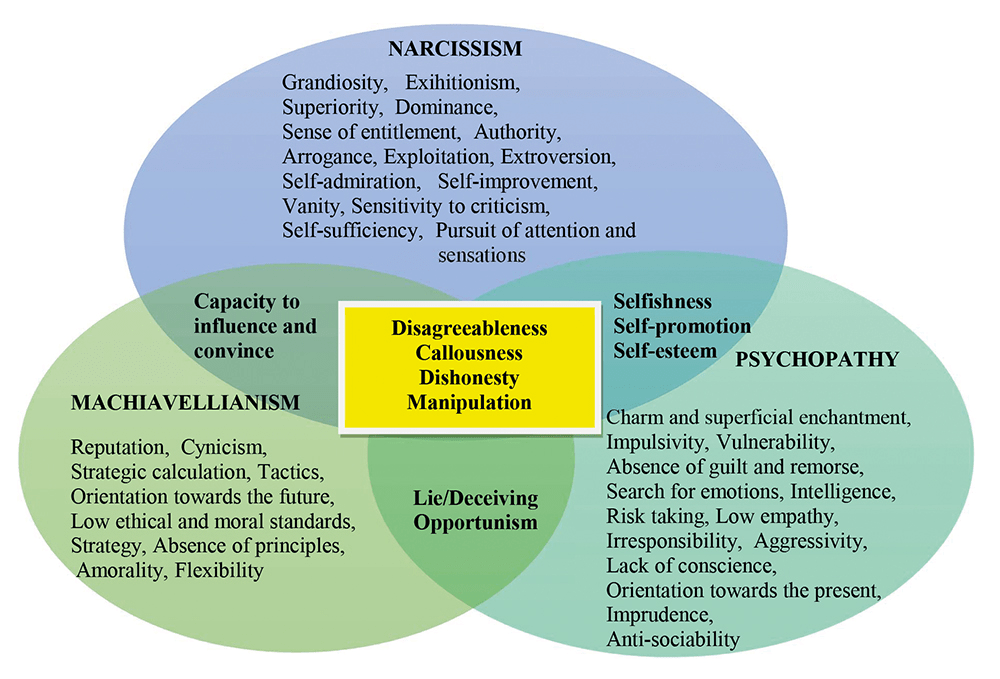
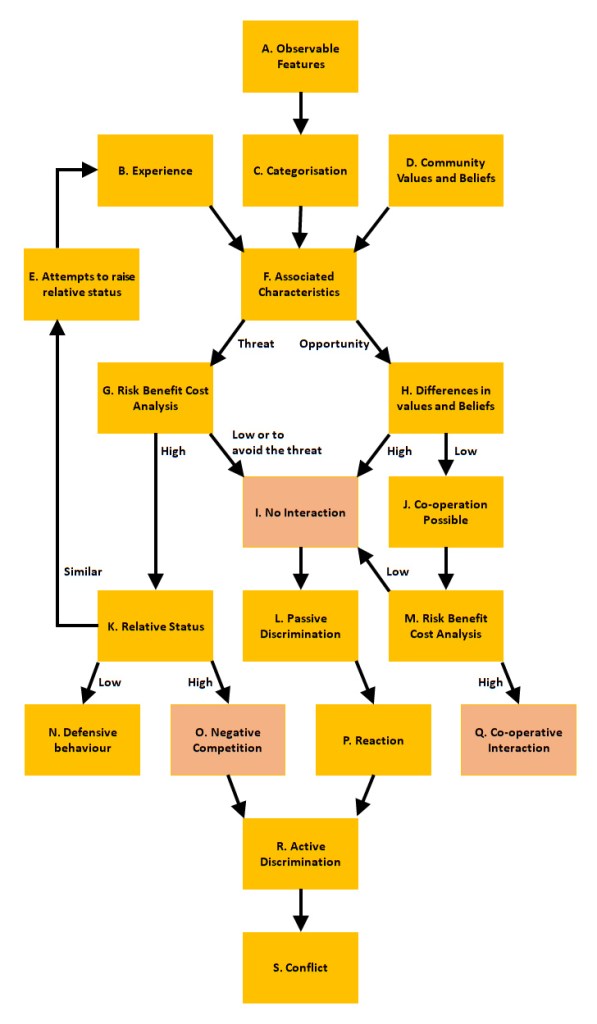

 Rational-Understanding.com